
Words CAROLINA VLACHAKOU // Images ELIZABETH QUEK // Motion ELIZABETH QUEK & SHOKIRIE CLARKE
Creation. Preservation. Destruction.
MOVES sits down with choreographer Chandenie Gobardhan and the cast of Caught Again in the Net of Rebirth, a new work driven by the Vedic concept of the Trimurti, creation, preservation, and destruction.
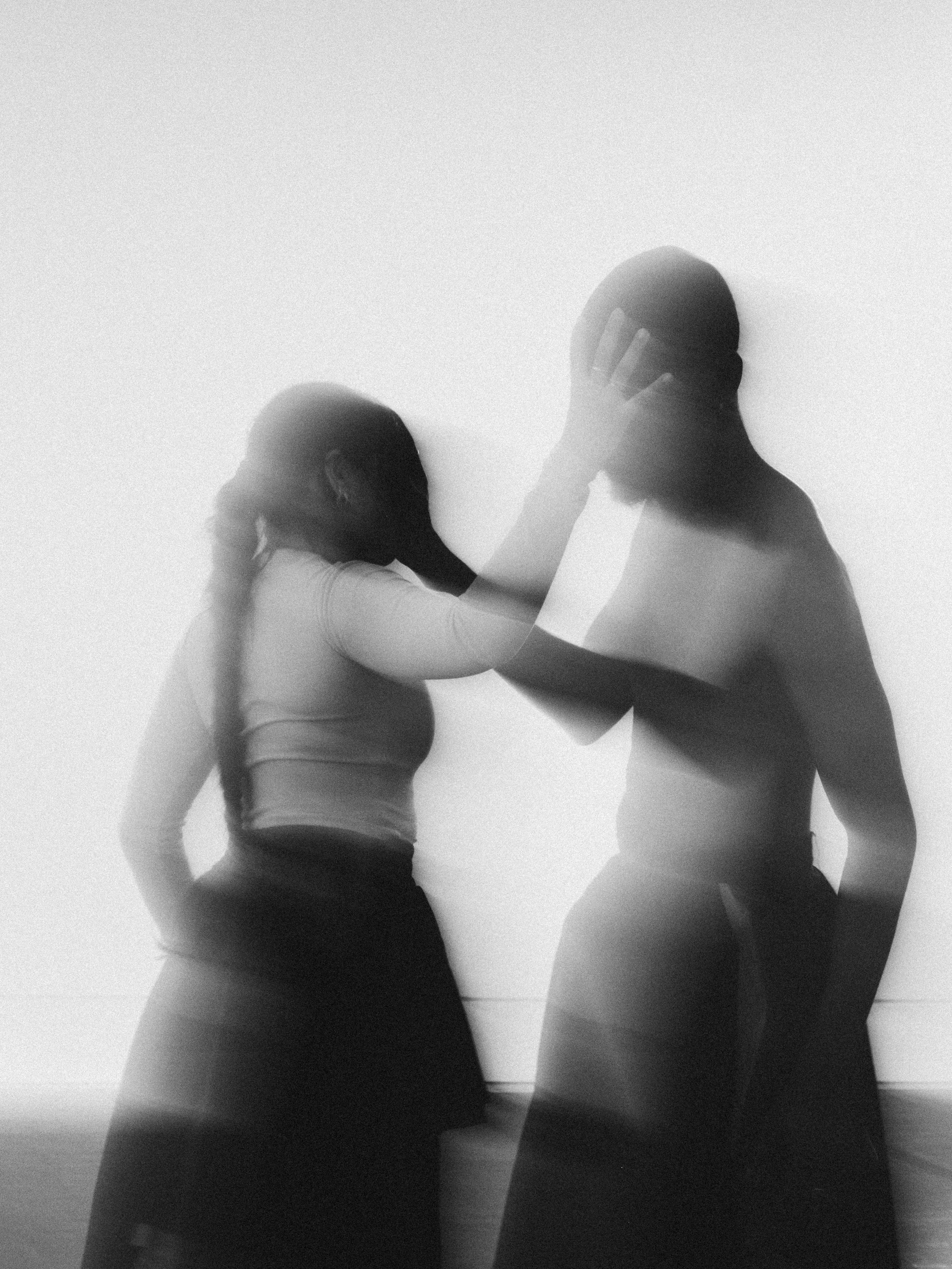
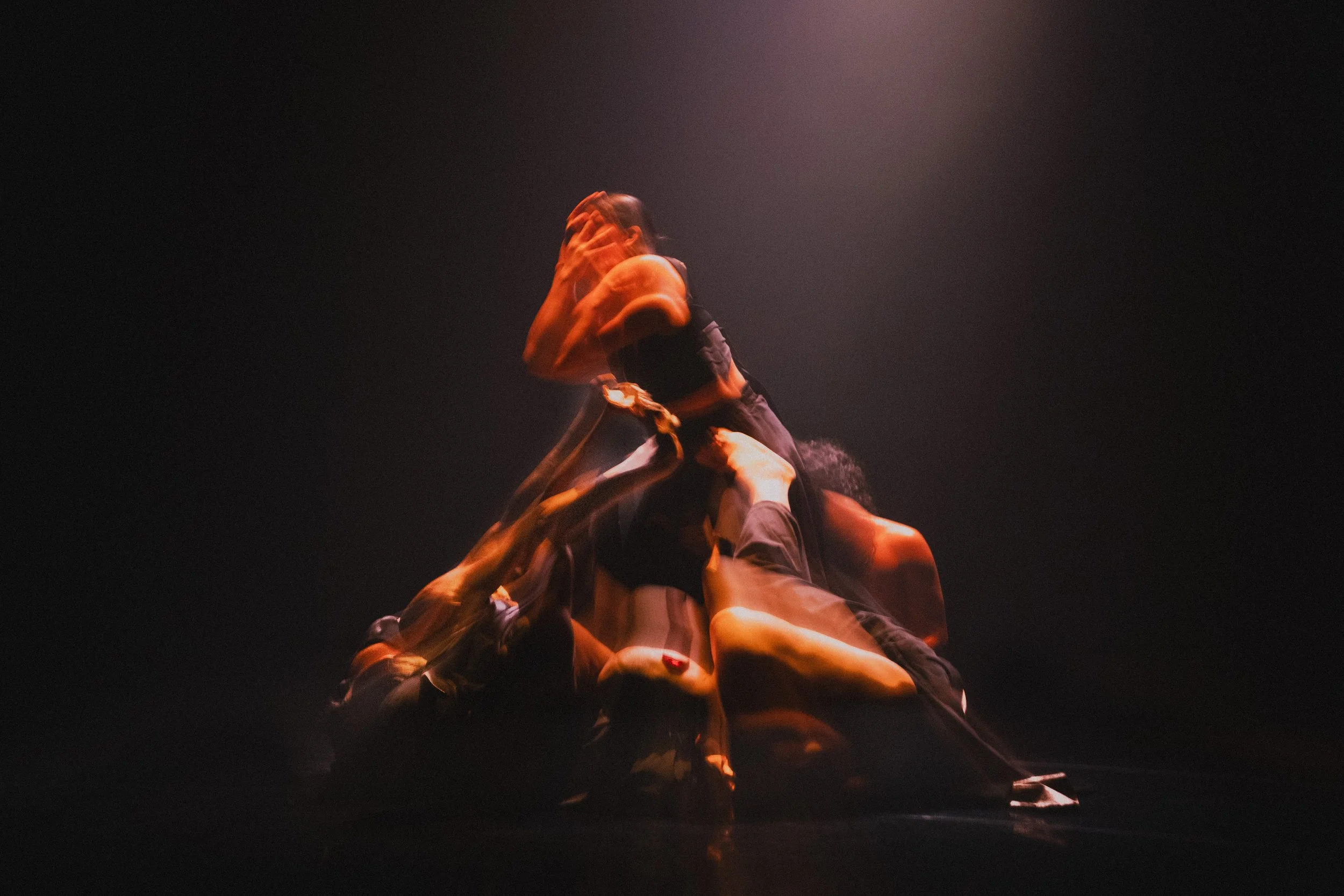
Blending street styles, contemporary dance, and Bharata Natyam, the piece brings together multiple movement languages and lived experiences, collapsing past, present, and future selves into a shared moment on stage.
We spoke with Gobardhan and the dancers about hybridity beyond style, transformation as an ongoing process, and what happens when belief, memory, and movement meet in the body.
“Movement becomes intersectional in the same way that identity is intersectional.”
- Chandenie Gobardhan
Edited by Elizabeth Quek
In discussion with the cast
Trimurti symbolises the cosmic functions of the supreme, ultimate reality. Is this something you are trying to achieve or move towards through this piece?
CHANDENIE: I mean, it’s been part of my life forever; it’s something I grew up with in Hinduism. I’ve had a poster depicting the Trimurti in my bedroom for as long as I can remember. When I started researching it five years ago, because I wanted to make a piece about it, I think I looked at it as something that was quite far away, a mystical subject, and I treated it as such.
The more I researched, the more human it became to me, and it became much more about what I was experiencing every day and how I was looking at my life and my relationships with people. It's a very abstract subject. It's about a cycle that is creation, preservation, and destruction. What does that mean?
But the more I started going deeper into it, the more I saw it in such human things, friendships, creating a friendship with someone and sustaining it and sometimes that friendship ends, or even the cells in my body, being created, being preserved, and then dying down; the birth of my little niece, my sister's baby, seeing her being born, I was like “oh, there’s a bigger line”; birth, life and death. So it became very human. Yeah, it is a concept from scriptures, but I think it's so much more contemporary than it may be perceived as.
“I think the non-linearity is the beauty of this specific work as well, because there is no beginning or end to a story.”
- chandenie gobardhan
There’s a sense that rebirth here isn’t dramatic; it’s natural, intuitive. Does transformation always has to look “new” to be real? Why have you chosen to look at transformation through this lens?
CHANDENIE: I love this question. No, I think that's maybe how we started researching what ego death means, that you have to be working towards a place where you can look at yourself so directly and honestly that you let go of a part that no longer serves you, and then you're new and you're enlightened and you're reborn.
There isn’t one moment when everything just changes. I think that is what life is about, because everything keeps changing all the time. Yes, there is something new, but a part of you will always still carry memories from the things you've experienced, even though you choose to live differently
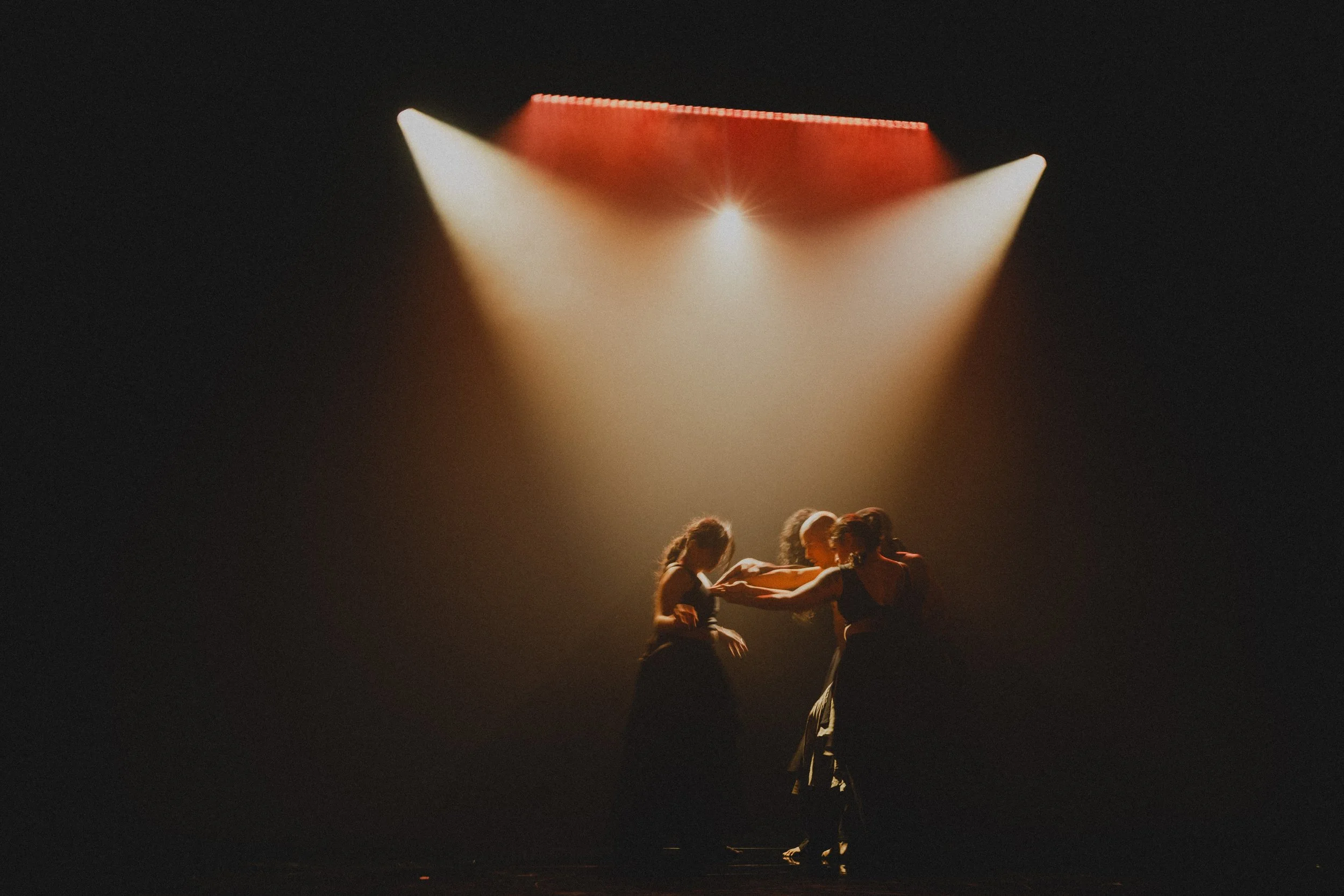
The Trimurti is inherently cyclical, bringing creation, preservation, and destruction into continual relation. In your work, these forces also feel fluid and simultaneous rather than sequential. Could you talk about how this coexistence operates in your practice? Are these states distinct, or do they function as overlapping, ever-present processes?
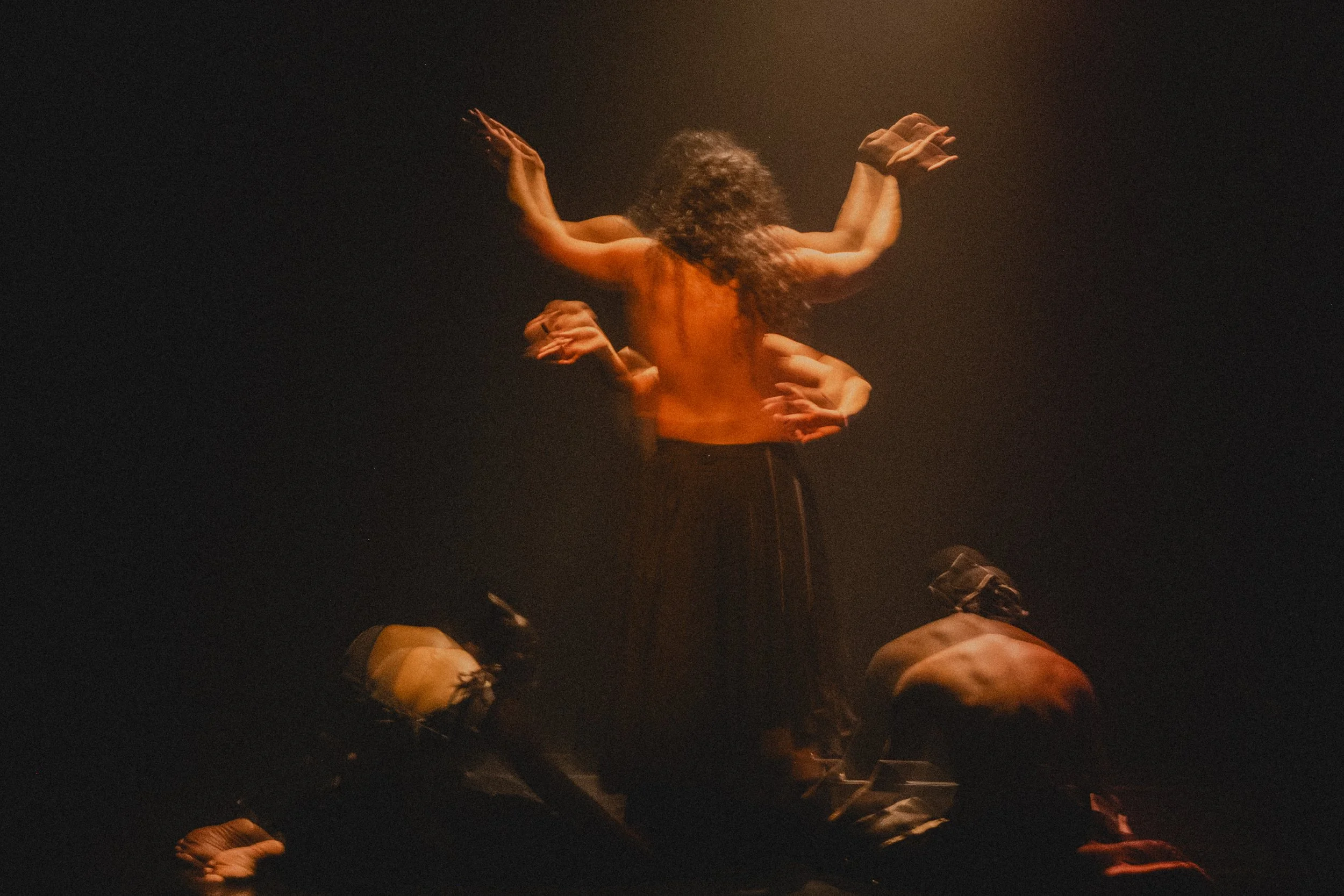
CHANDENIE: When I first started, I looked at it as there's birth, life and death. But then the more I started going into it, and the more life experience I got, I started realising that even within creation, there is destruction and preservation, and everything is happening all the time at the same time. Every moment can be part of a different phase. I think the non-linearity is the beauty of this specific work as well, because there is no beginning or end to a story.
The concept I’m using as a base is that we are all the same being from different moments in life, but meeting in one moment. So in one section of the piece, Elsa could be my future self. James could be a version of me that maybe never even made it to this earth. I am you, and you are me. There was this funny story; I was reading scripture the other day, and there was this story about isolation and aversion to groups; isolating yourself, for the sake of spiritual growth. One of the deities, Krishna, loved being in groups because being close with many different people brought him into a state of bliss and ecstasy.
FLO: “We are almost shards made from the same mirror.”
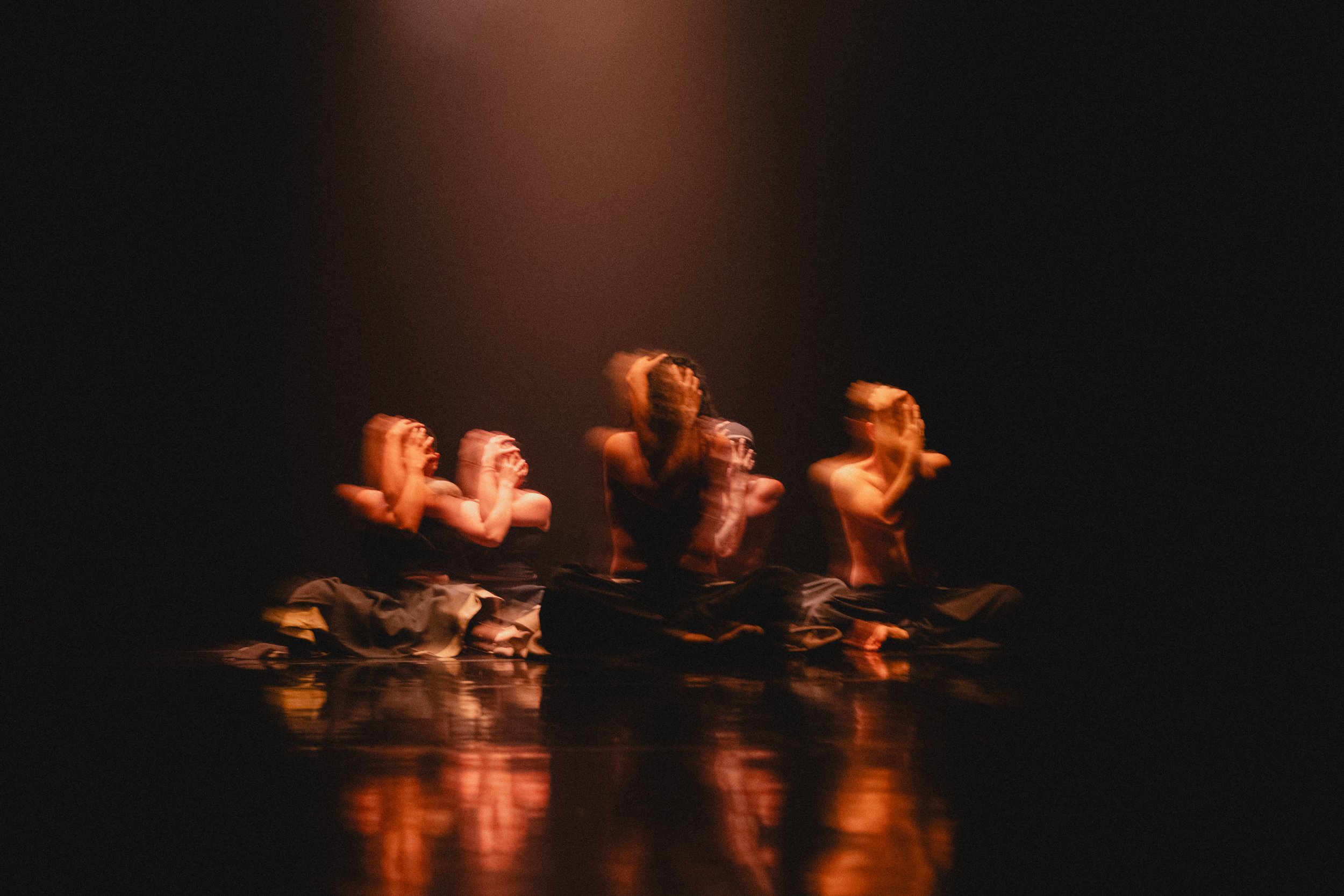
CHANDENIE: Describing it as a chandelier, how one lamp can be surrounded by many different crystals, and become a big light because everything reflects on each other. That's kind of what it is to be alive, because we are all light, and we are all source, and the moment that we step together in one space, we're all reflecting that light upon each other, and it just becomes this big vibrant thing that can feel really fueling for you. Everything has an impact on everything else. If James moves slightly, it has an impact on how that reflects upon me. I think it's just the mini universe of how I look at the big universe.
“something so expansive that you’re not really thinking in terms of style anymore. It’s beyond style.”
- Flo Kabasubabo
How did collaboration shape the way everything came together?
FLO: I felt like everyone's movement, everyone's perspective and views on the subject were so different. I felt it all, kind of naturally, fit into one big light ball. Everyone learned from the others’ approach, movement-wise. Not everyone here has the same belief system, but there's a sense of unity.
CHANDENIE: I really enjoy talking about the work, but I feel like this is my highlight of the whole process. We spent a lot of time trying to find what this whole concept means for us, verbally. And then we used to freestyle for maybe an hour on a subject, a topic, iconography, or images, film it and see what comes out. Also, everyone has a very different movement style as well, which I've obviously chosen consciously. I think from the start, I always try to embed everybody in the work.
ELSA: It’s been incredibly inspiring. Everyone’s individuality is so strong that it really stands out, and although we’re all very different, there’s a shared understanding that allows us to adapt to one another. We spend a lot of time together, and that closeness has really shaped the way the collaboration has come together.
JAMES: When I step away from the group, I appreciate it even more. Moments of physical limitation make me reflect on fragility and presence, and from that perspective, it feels especially meaningful that we can come together now. Knowing that this won’t last forever makes creating this chandelier together feel all the more beautiful.
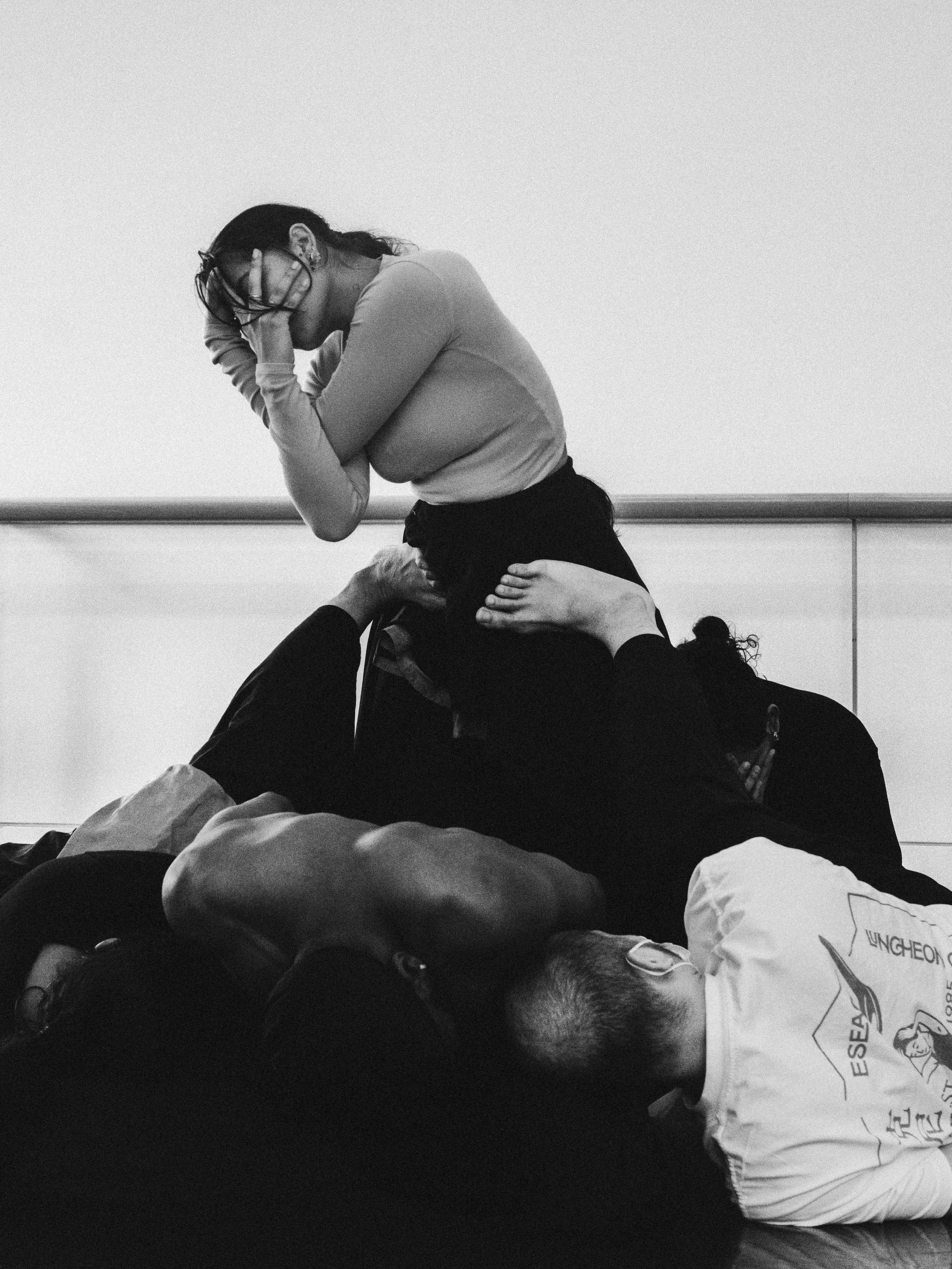
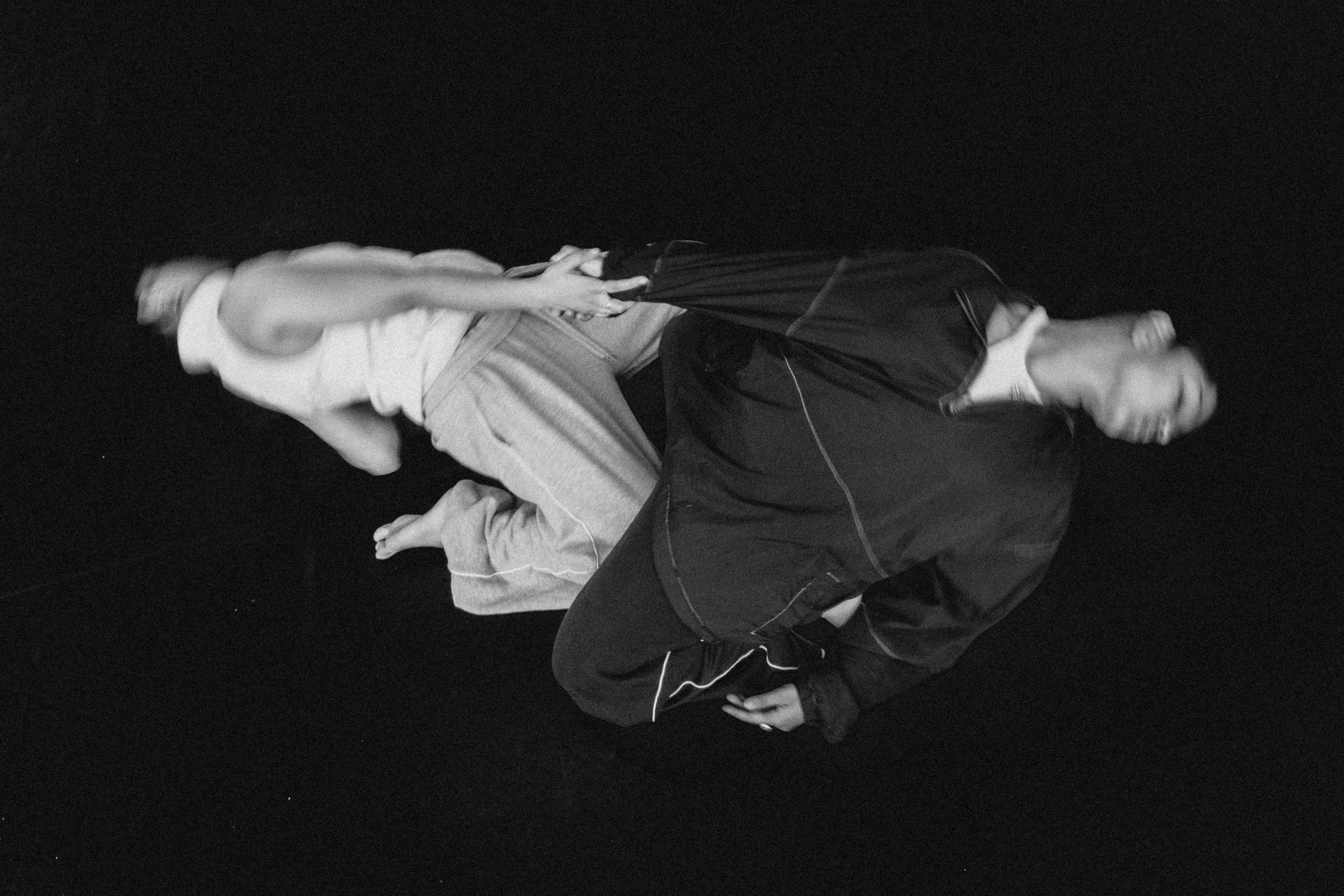
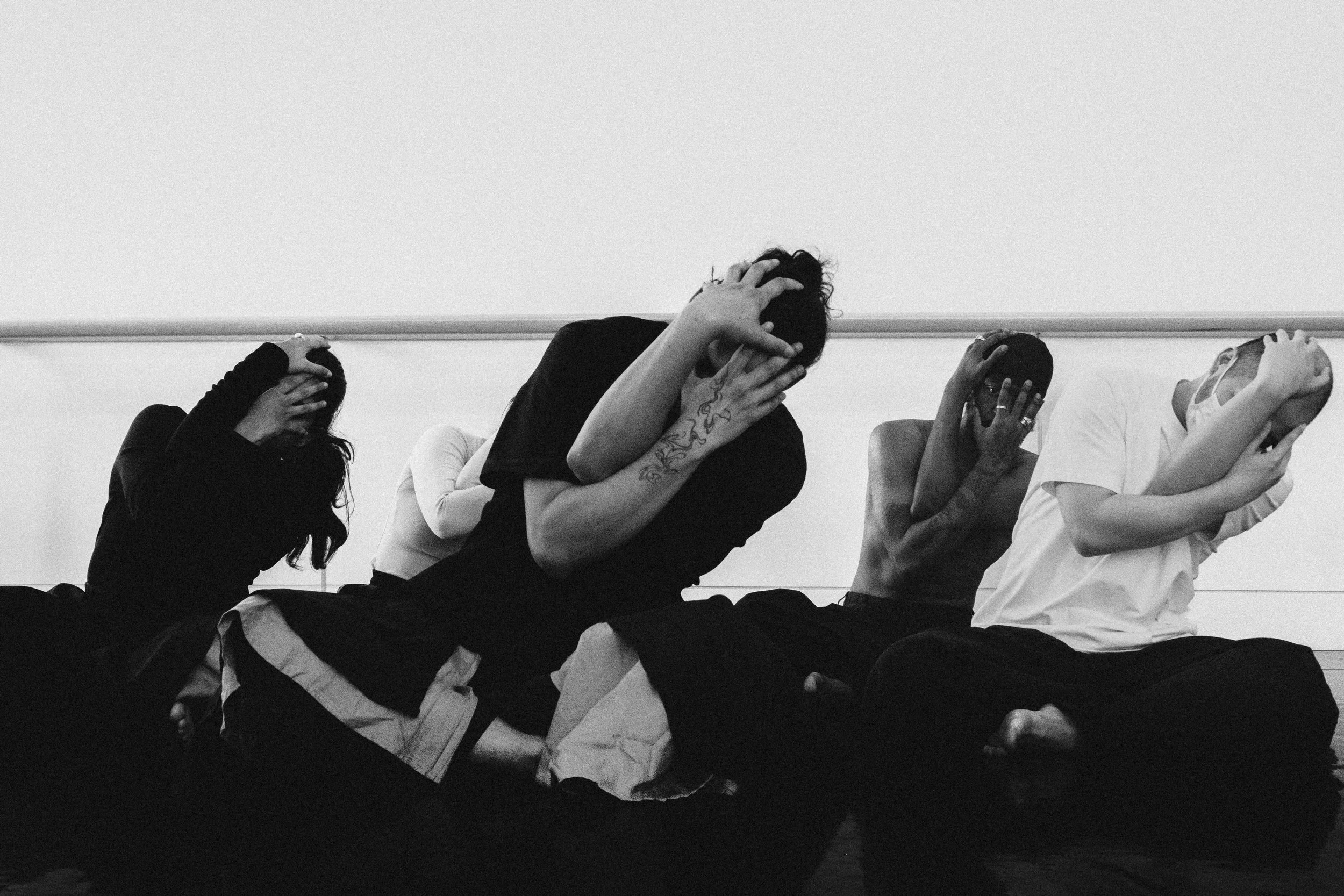
Do you think audiences sometimes expect hybridity to feel seamless? How do you feel about this and approach it when intertwining such diverse dance styles (Bharatanatyam, Street)?
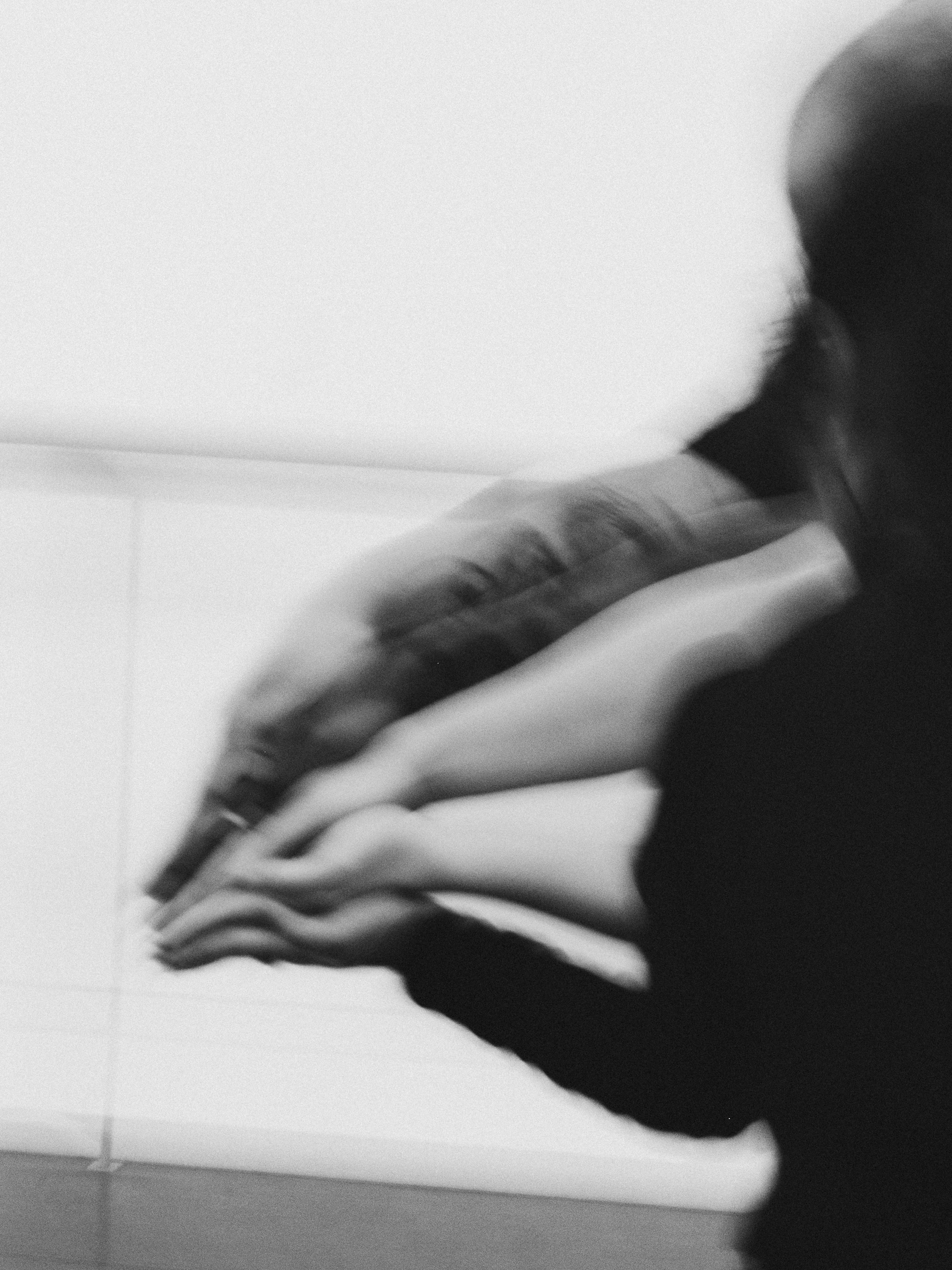
CHANDENIE: I think the hybridity kind of just existed; it wasn't really a choice. When people look at my work, it's not super defined; it's just how I am as a person. That's what the style is. I don't teach them to dance like me. I think it's more a way of approaching concepts and feelings.
FLO: I feel like it’s a large part to do with dancers understanding the world that’s been built. You can see influences in the background, but it’s not so much “I’m doing a six-step” or “I’m breaking.” It’s more about how those influences feed into the world that exists beyond the stage, something so expansive that you’re not really thinking in terms of style anymore. It’s beyond style.
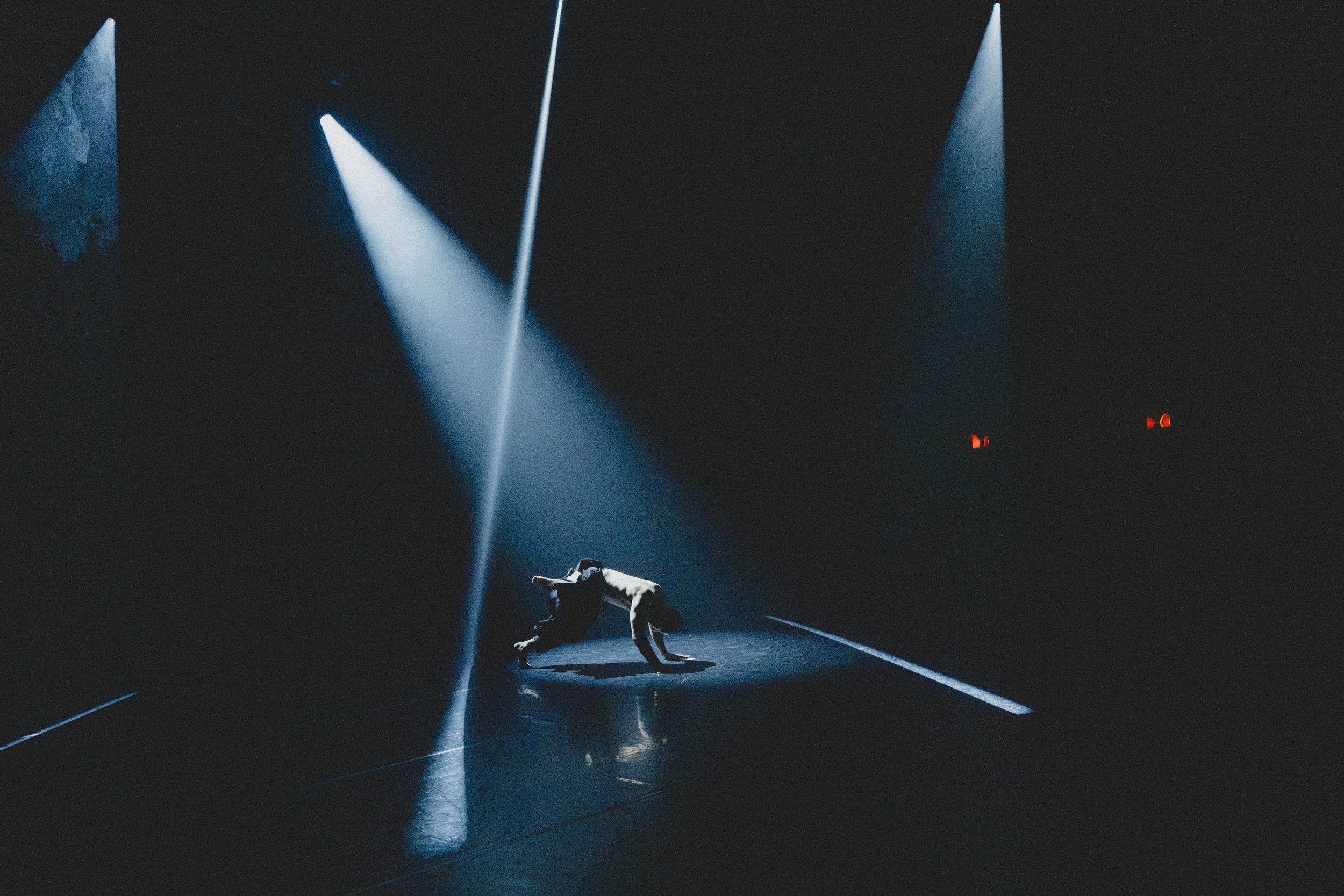
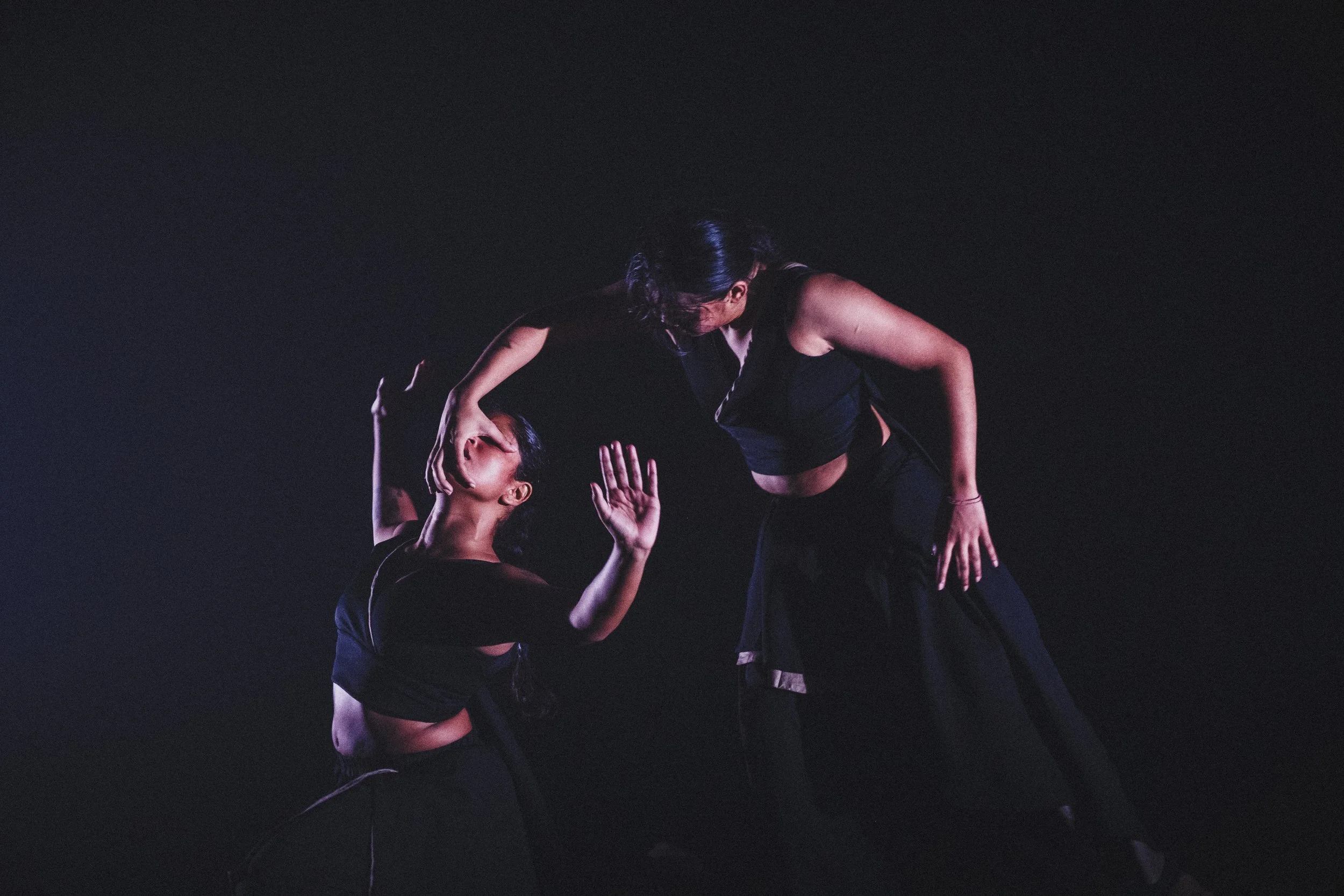
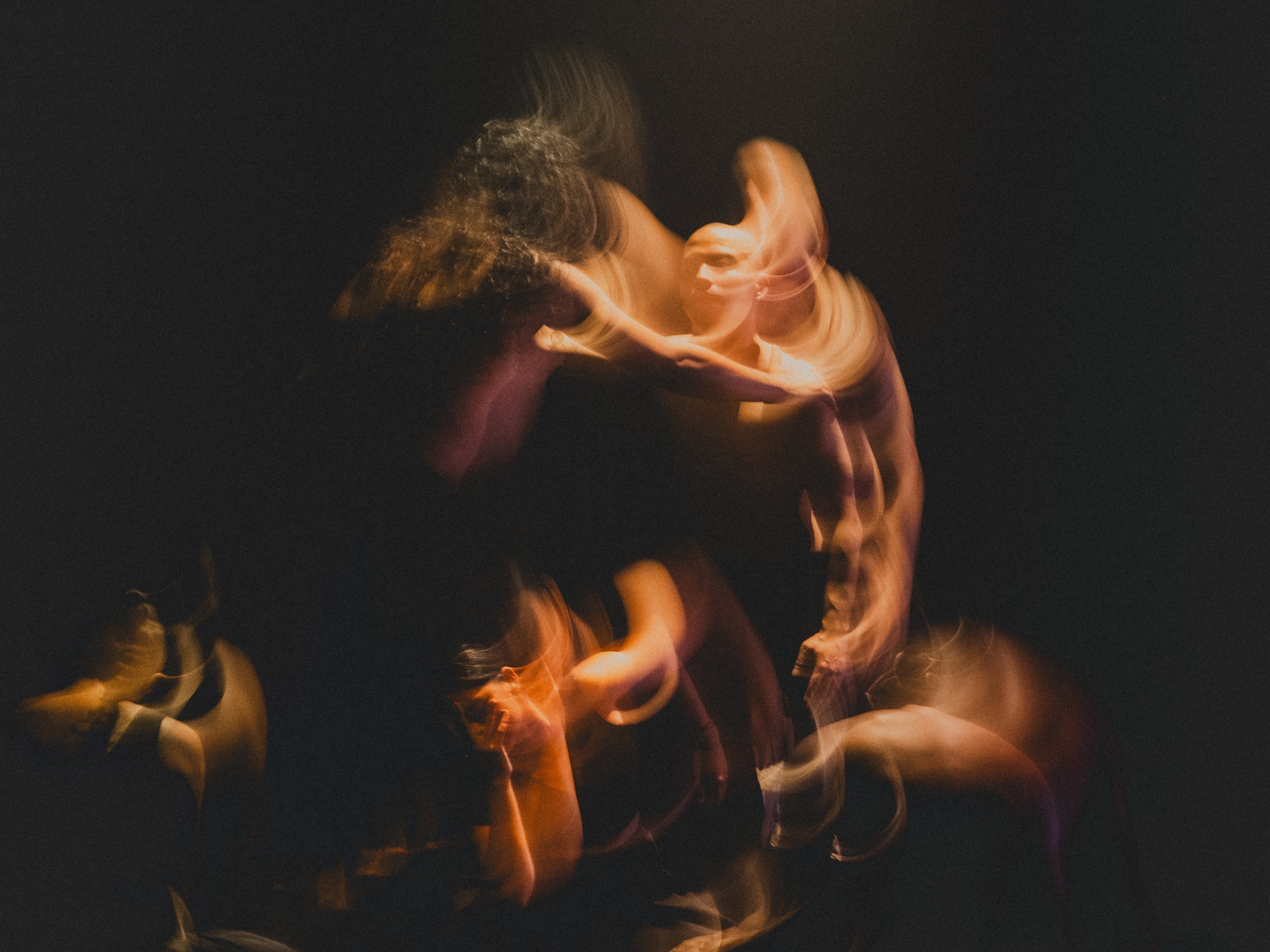
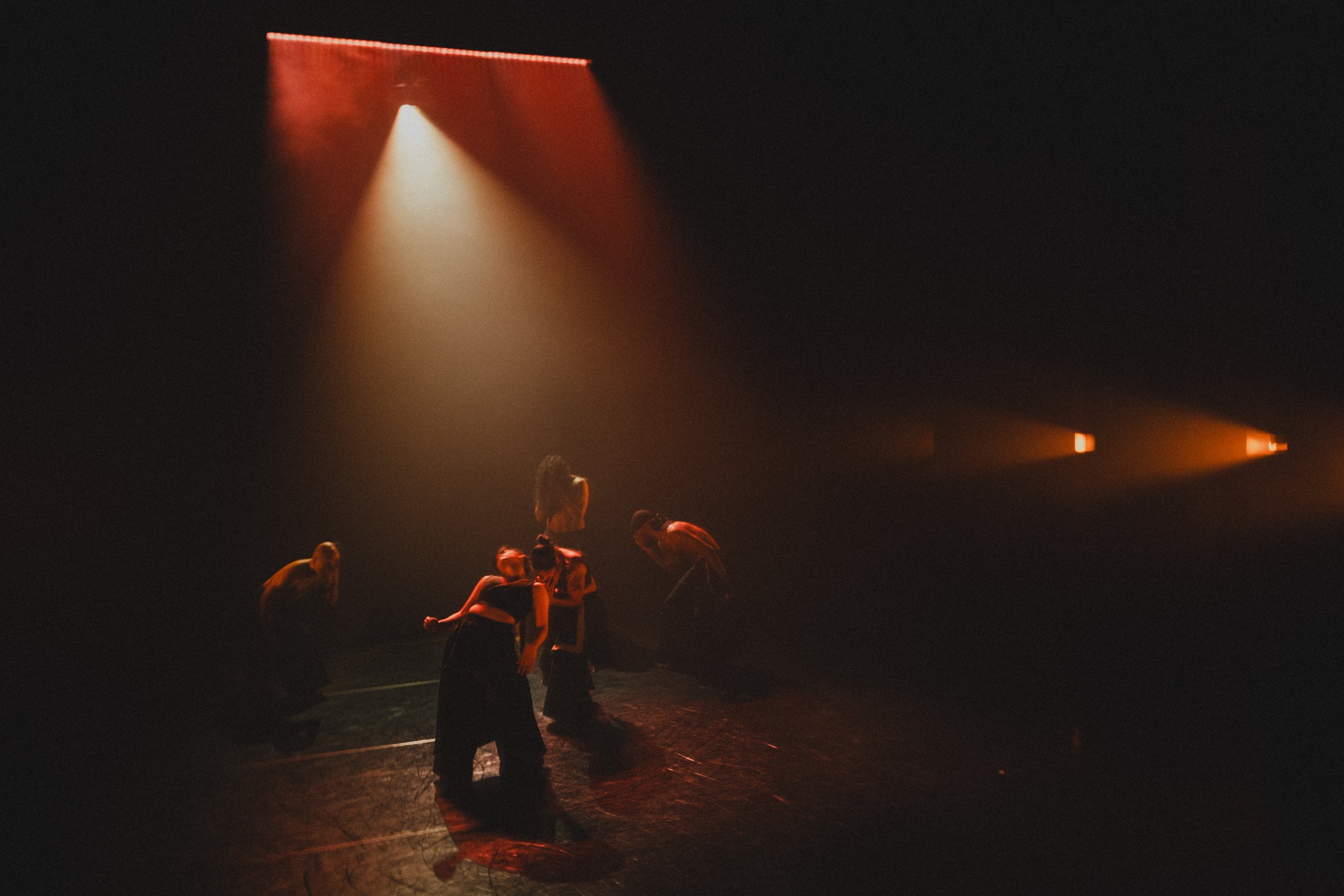
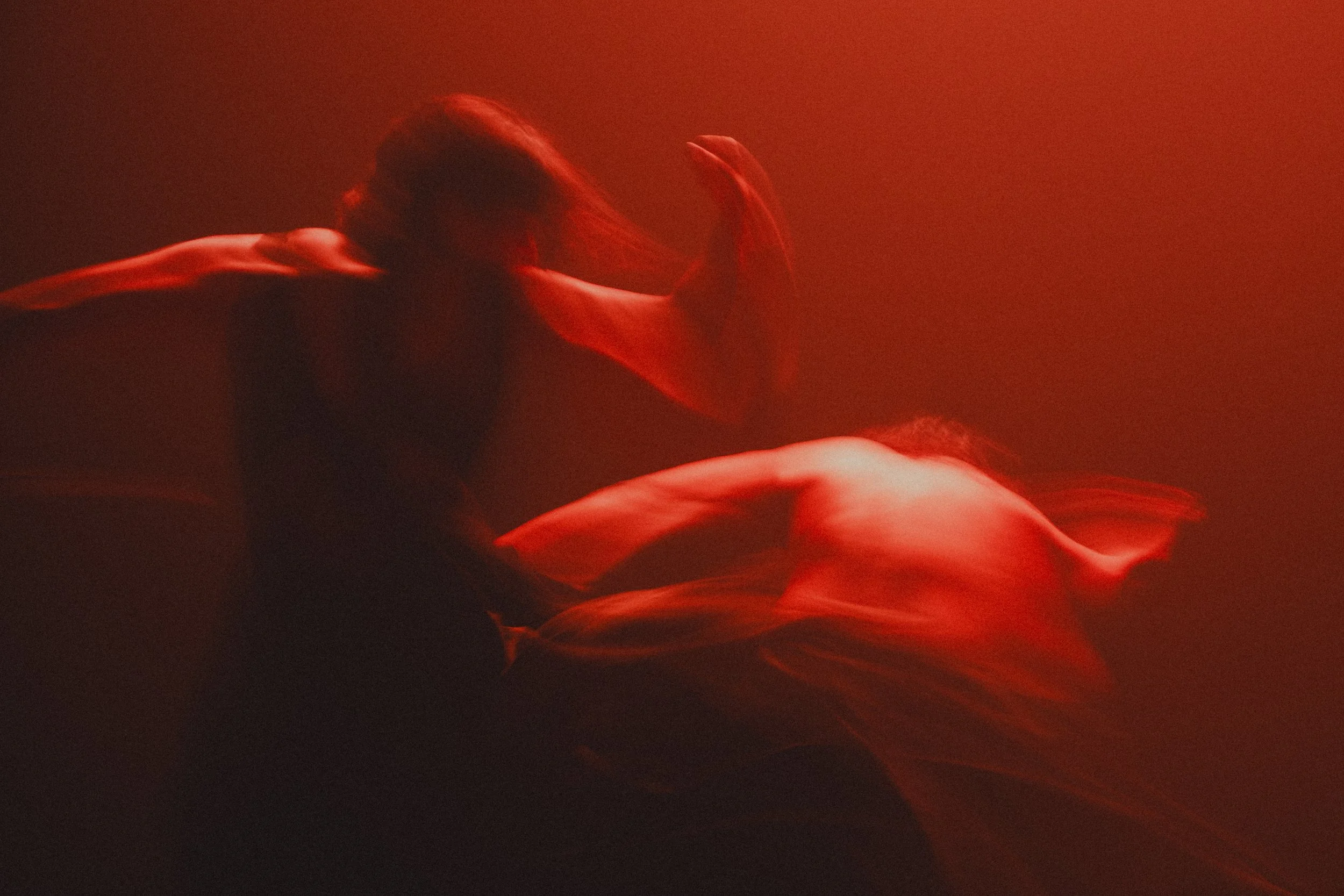
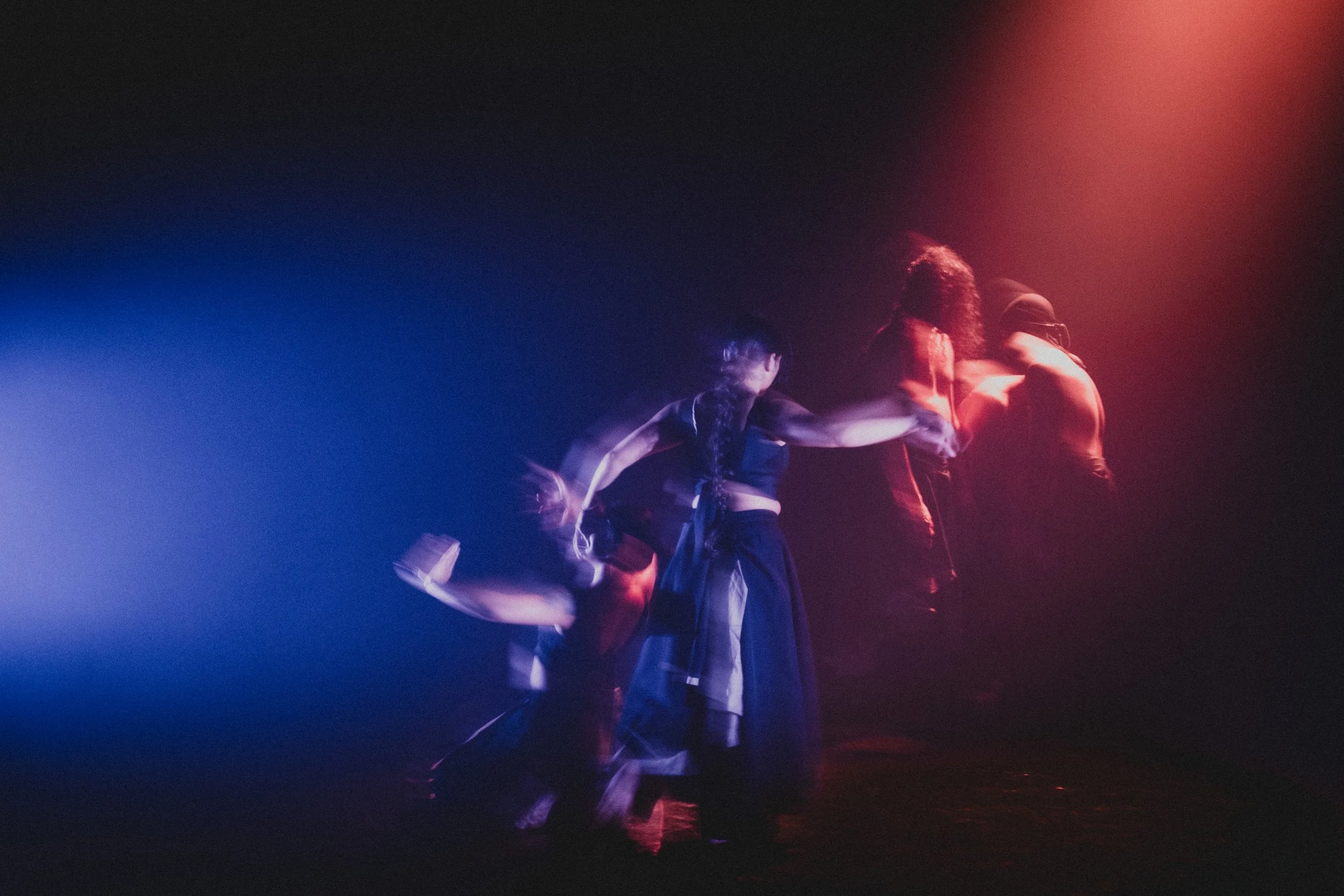
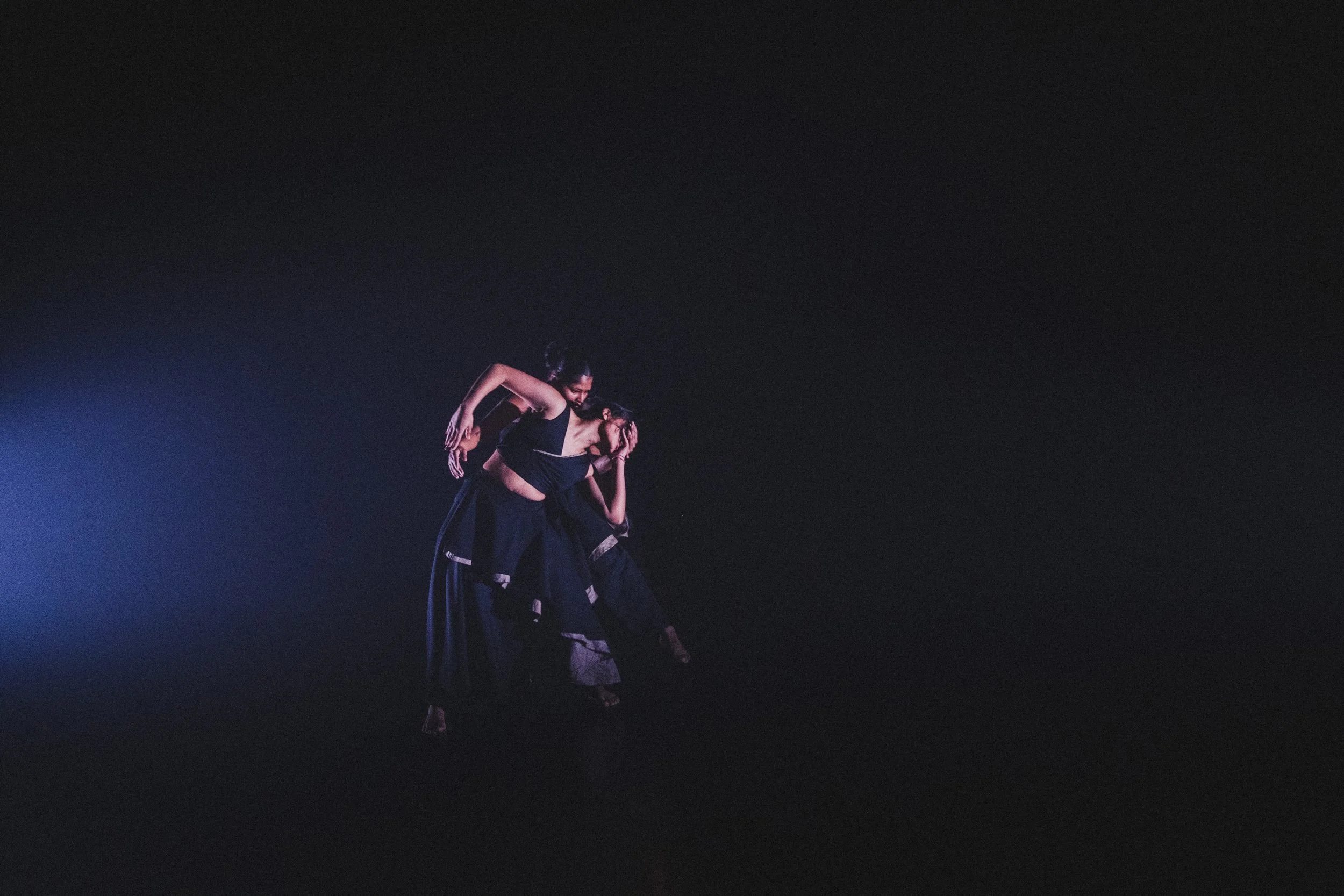
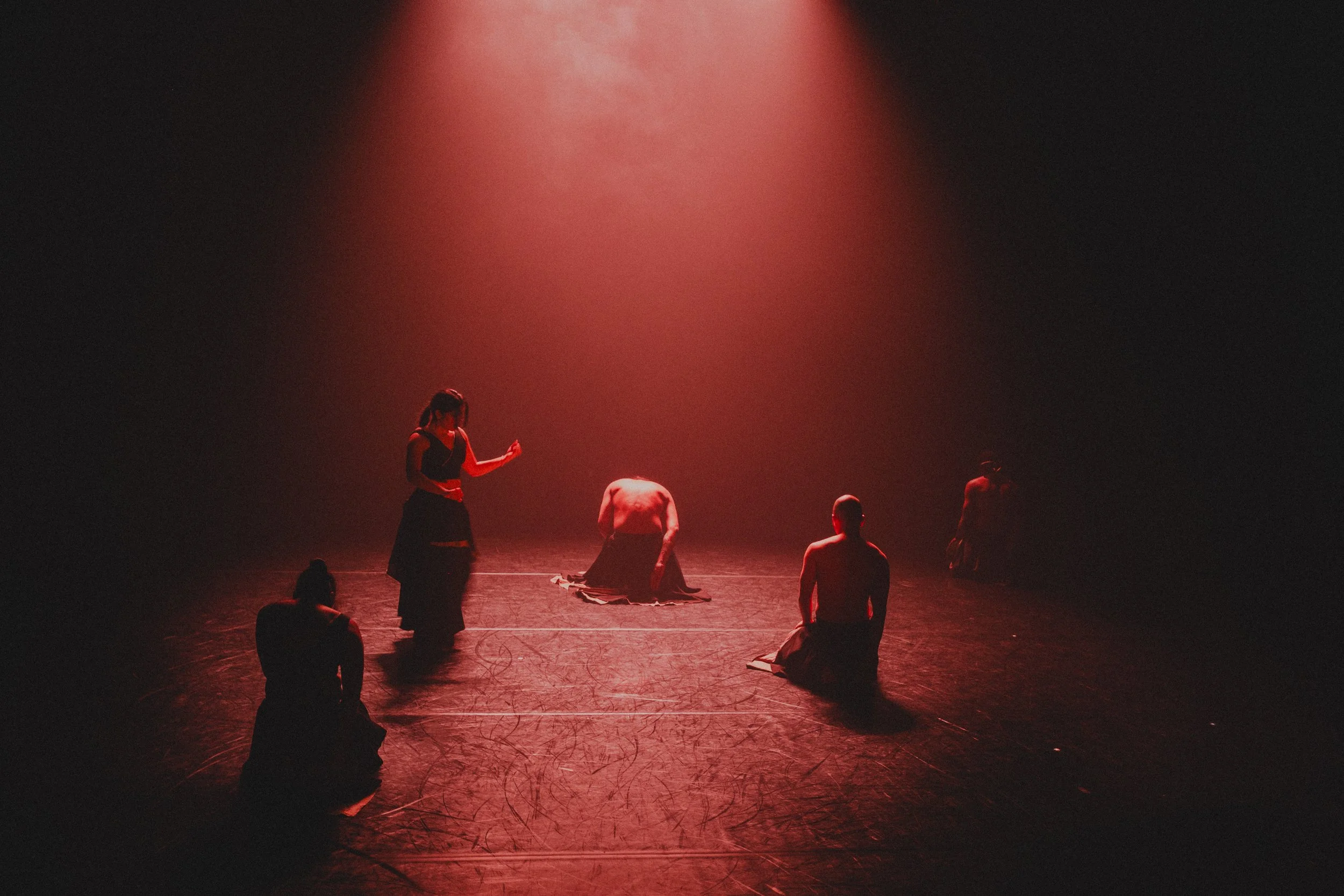
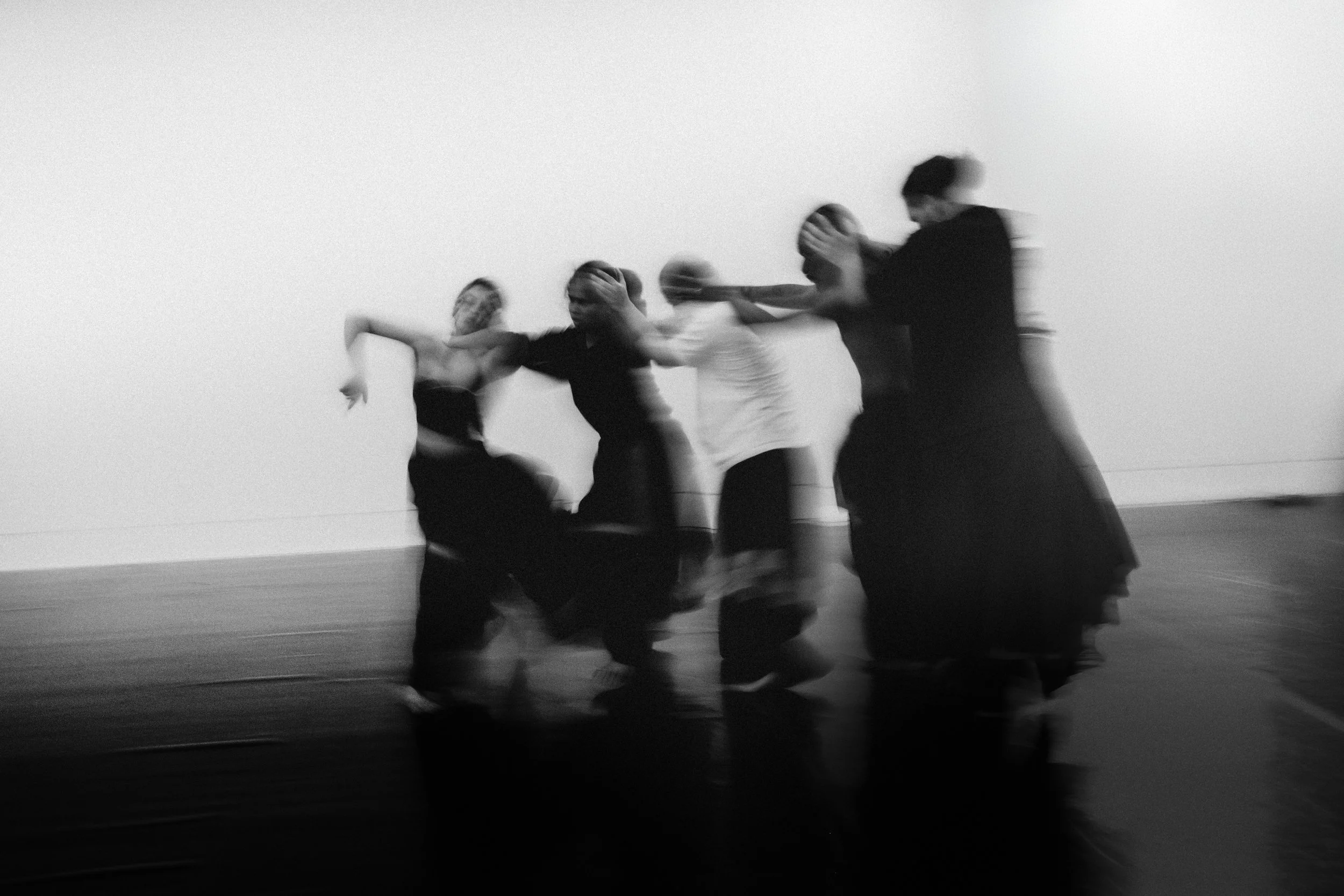
Cast: Elsa Roy Gupta, Flo Kabasubabo, James Olivo, Ser Sebico and Chandenie Gobardhan
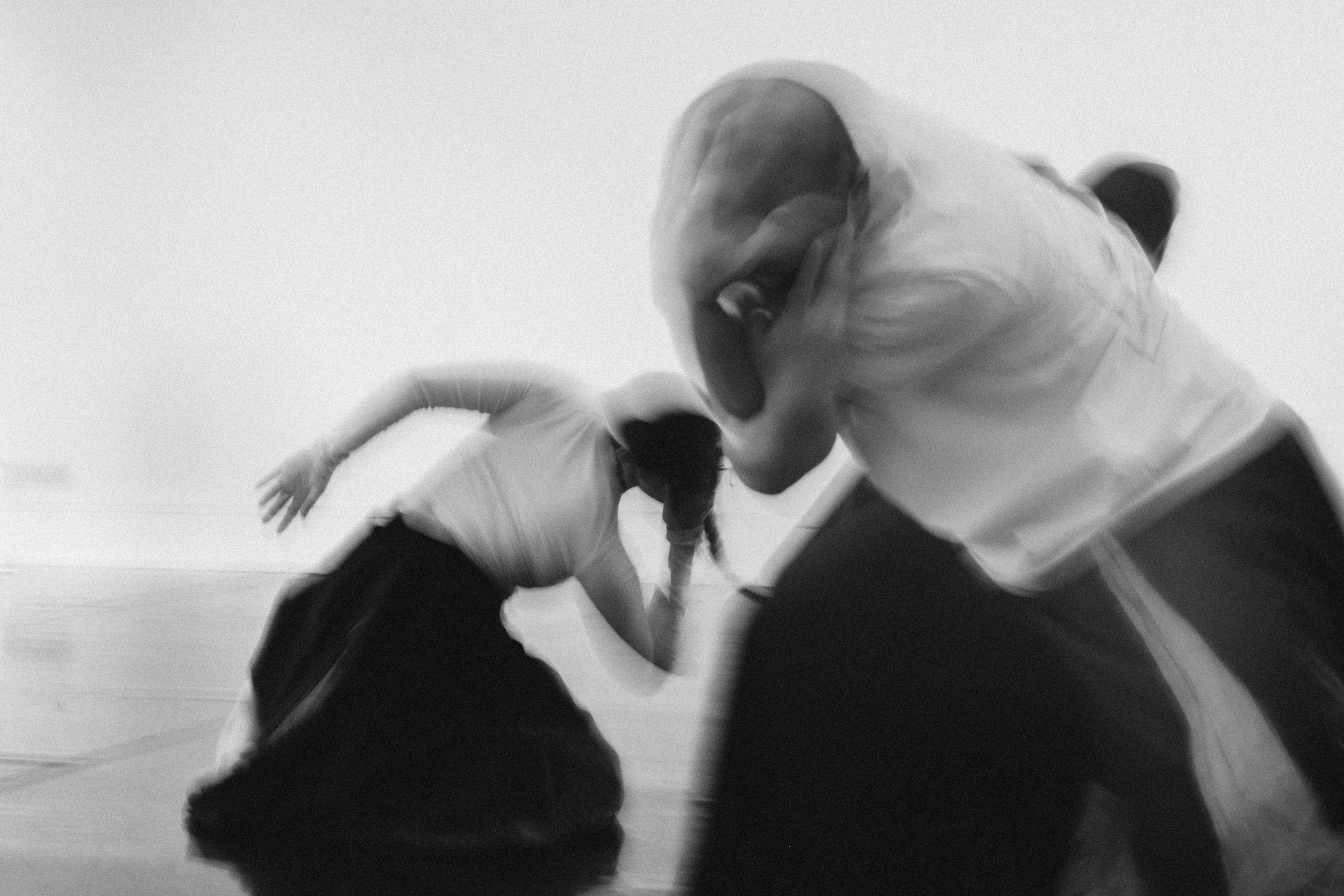
CHANDENIE: When people don’t see what they expect, they’re like, “Oh, what is this? This is not hip hop.” And I’m like, yeah, because that’s not what I’m trying to do. I’m not interested in showcasing styles in their pure form. We often use terms like hybrid or fusion to talk about dance informed by many things, but that’s exactly how we exist as humans. It wouldn’t make sense that people coming from different countries, spiritual practices, and life views would fit neatly into one style. So when we come together, movement becomes intersectional in the same way identity is intersectional. This piece is all of those intersectional identities intersecting. All of it is present at once. Maybe one section is more informed by one practice than another, but everything is still there.
That doesn’t mean I don’t care about rules or foundations. I’m deeply rooted in locking and Bharata Natyam, I still practice the foundations and respect the traditions. Because I’m so rooted in them, I’m able to do what I do. What matters to me is that movement serves the idea. If there’s threading, it’s about showing interconnectedness, not about naming a style. Even if people don’t have the same background, they can still feel it, recognising something and discovering it at the same time. I love that feeling, because it’s like finding it together as it’s moving.
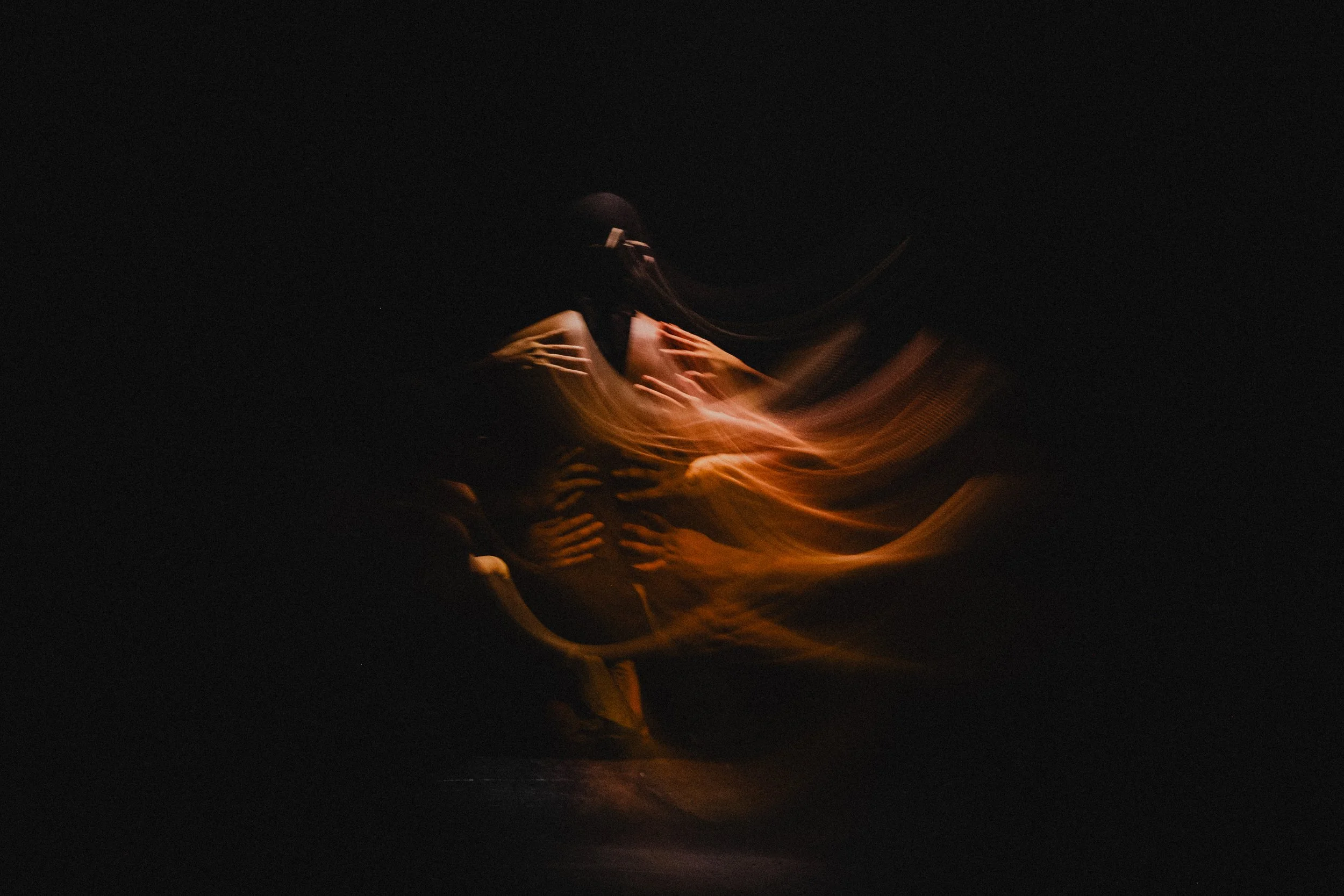
Rather than presenting rebirth as a spectacle, Caught Again in the Net of Rebirth meets transformation where it actually lives: in bodies shaped by memory, belief, and one another. Moving beyond style and into shared experience, the work reminds us that change isn’t a moment we arrive at, it’s something we’re already moving through, together.
The performance premiered at The Place on Saturday 28 February 2026.
Choreographer CHANDENIE GOBARDHAN // Cast ELSA ROY GUPTA , FLO KABASUBABO, JAMES OLIVO, SER SEBICO and CHANDENIE GOBARDHAN // Rehearsal Director PENELOPE KLAMERT & FRANCESCA MILES // Composer TORBEN SYLVEST in collaboration with RAJ MOHAN, AVI KISHNA & KRITHIKA SOMA // Costume designer JOCA VEIGA // Lighting Designer CLANCY FLYNN // Dramaturge EVA MARTINEZ // Producer TREACLE HOLASZ // Project Manager LARISSA KOOPMAN
