Humans, machines, movement: Wayne Mcgregor infinite bodies
Words KARLY BENSON // Images ELIZABETH QUEK & SHOKIRIE CLARKE
Wayne McGregor’s Infinite Bodies explores the future of dance in the digital realm.
Entering Wayne McGregor’s world of Infinite Bodies at Somerset House, visitors are transported to an alternative realm, reminiscent of our own, yet eerily different. Here, human and technological bodies coexist, sometimes merging entirely — a dynamic McGregor describes as the “coldness of machine” interfacing with “the messiness of creature.”
The relationship between physical intelligence and technology underpins the exhibition, which spans 30 years of McGregor’s choreographic work and creative research. Drawing on collaborations with artists and institutions including Max Richter, Random International, and Google, Infinite Bodies is an intimate, behind-the-scenes look at Mcgregor’s career.
Rather than chasing novelty or flashy technology, the exhibition reflects on the possibilities technology offers the human, dancing body as the world shifts around it.
As visitors move through the exhibition, they alternate between being immersed in the space and a voyeuristic observer — a position that is both informed by and integral to the work. From motion-sensing mirrors with mechanical arms, to acoustic landscapes and orbiting screens, the installations are experimental and thought-provoking, asking viewers not only to watch, but to join.
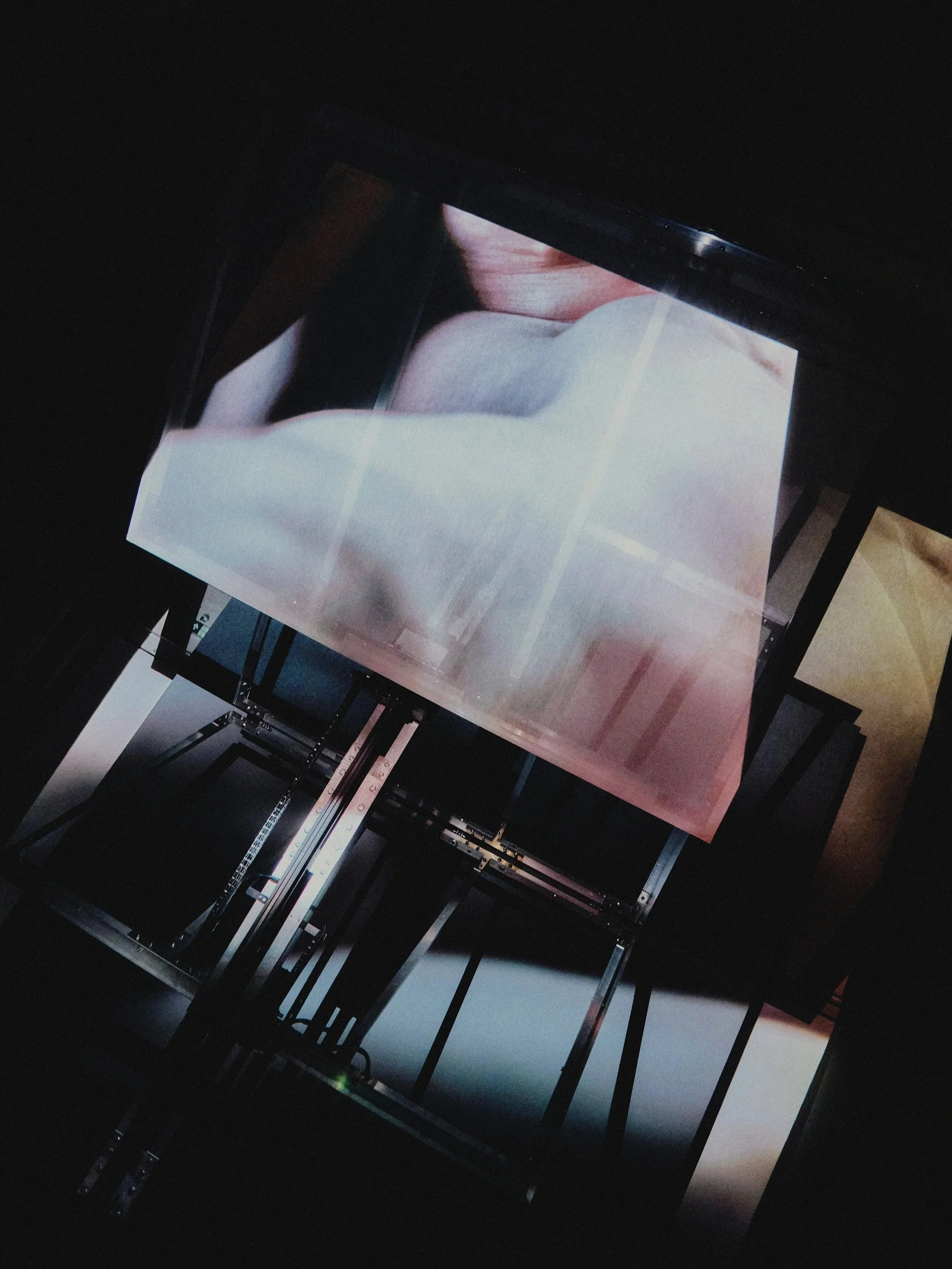
The opening exhibit, OMNI, feels like the quintessential marriage of physical bodies and artificial intelligence. Echoing McGregor’s successful ABBA Voyage, holographic figures composed of dots dance together, closely capturing the essence of human movement — though notably without a beating heart. Other works focus solely on challenging the senses. Deepstaria Void, for instance, is an aural piece shaped by the viewer’s sonic experience of the space, while A Body for AI projects McGregor’s dance films onto a constantly orbiting mechanical body, distorting the dancers and, at times, producing an entirely new film.
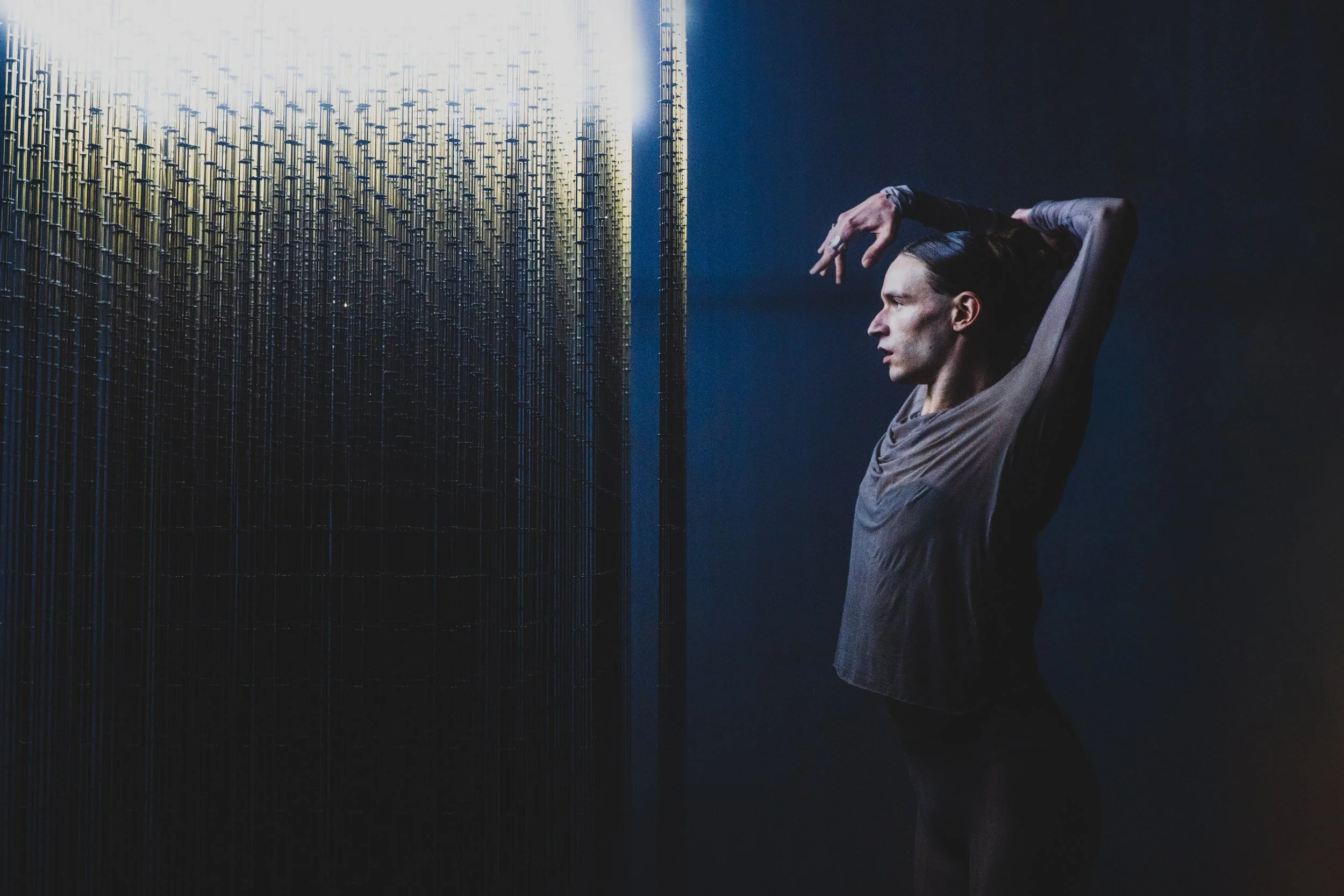
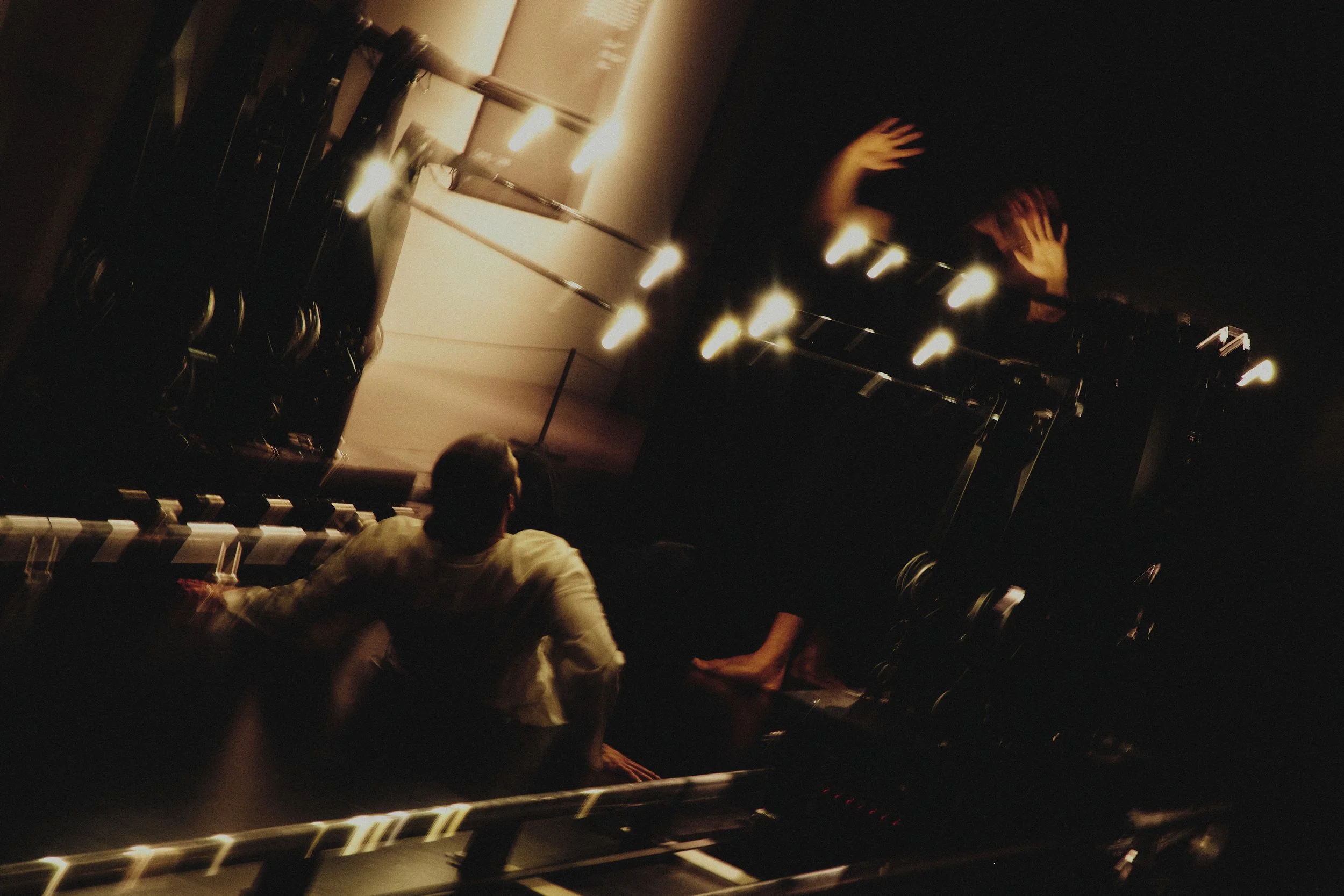
One of the most compelling works is Future Self, a responsive installation which creates “living” sculptures by capturing movement in light. For the first time in the exhibition, live dancers interact directly with the technology, responding in real time through McGregor’s choreographic vocabulary. As the performers approach the grid, the lights mirror their movements, creating a reflection of the human self in a three-dimensional, machine-emulated form. After dancing on opposite sides of the grid, the performers eventually meet, offering a rare, intimate moment of physical connection — perhaps the only one in the exhibition.
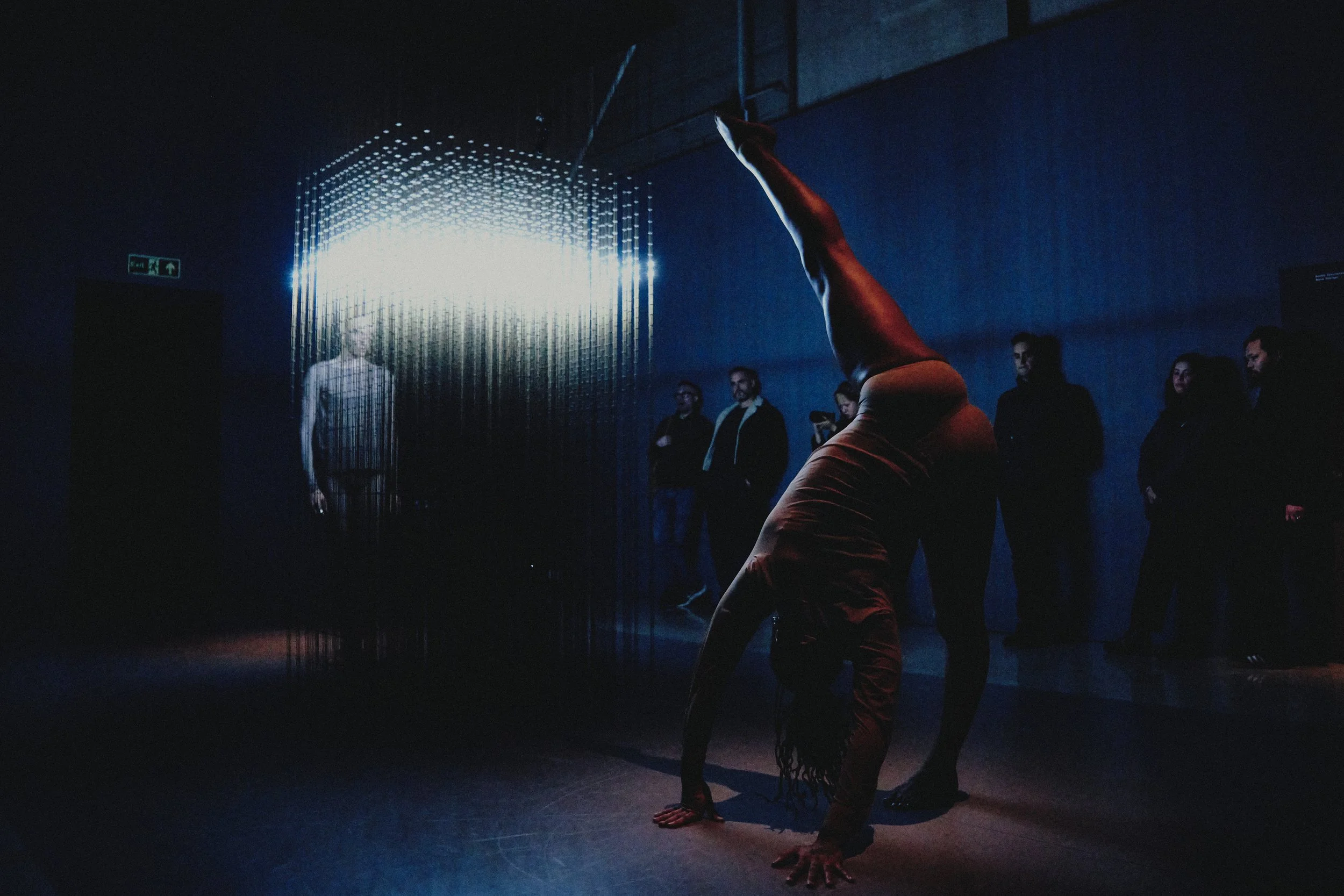
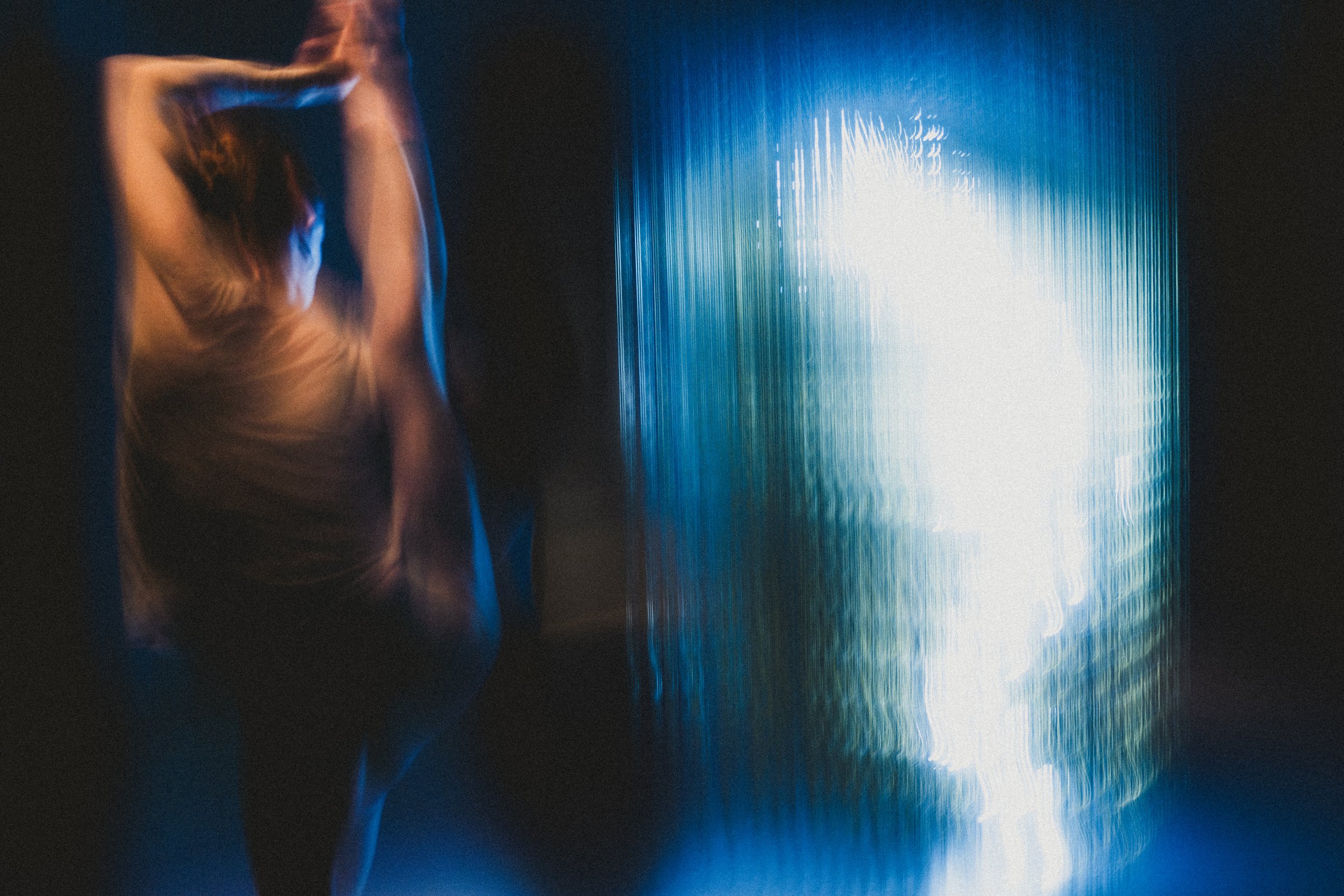
When the performers step away, viewers are invited to explore the installation themselves, coming face-to-face with the technology, apprehensive, yet undeniably captivated.
Infinite Bodies acts equally as a breakthrough and a prompt, inviting viewers to reconsider both the world around them, and their place within it. “Whatever you are holding up as the thing to experience or interact with is there to reveal something about yourself,” said Cliff Lauson, co-curator of Infinite Bodies. At its heart is a central question: “How will our experience of our physically intelligent selves evolve in an ever-transforming world?”
And yet, the exhibition doesn’t offer definitive answers. Instead, it explores the possibilities of this evolution, showing how physical intelligence might be carried into the digital realm — broadening human capacity and reshaping our relationship with technology. As noted by McGregor in an excerpt from the exhibition’s catalogue, “Our best ideas have arrived, glinting with possibilities, queries, and dares, rather than definitive statements.”
These possibilities are not confined to dancing bodies on stage. Lauson also noted that while the pinnacle of dance may exist on stage, acts of choreography in space extend far beyond professional performance, and, “like physical intelligence, can be applied to every person regardless of age, ability, or history.” McGregor’s work envisions a future where the physical body adapts alongside the digital — not diluting humanity, but reinforcing it. “Creature and machine have to be more in balance, and artists have a great role to play in this optimiSation of AI, to evaluate what is human,” McGregor said.
Beneath these thorough and innovative explorations lies a reckoning with what they may mean for our familiar world. Yet, even in an ever-changing time, dance and the physical body persist. Infinite Bodies imagines a future where humans co-evolve with technology, and the physical body finds its enduring place in a digital world.