Dance as defence: Repertório N.1
Words MIRANNE WATLEY // Images ELIZABETH QUEK
The master’s tools will never dismantle the master’s house. Audre Lorde’s famous reminder that a complete reimagination is required to oppose systems of violence.
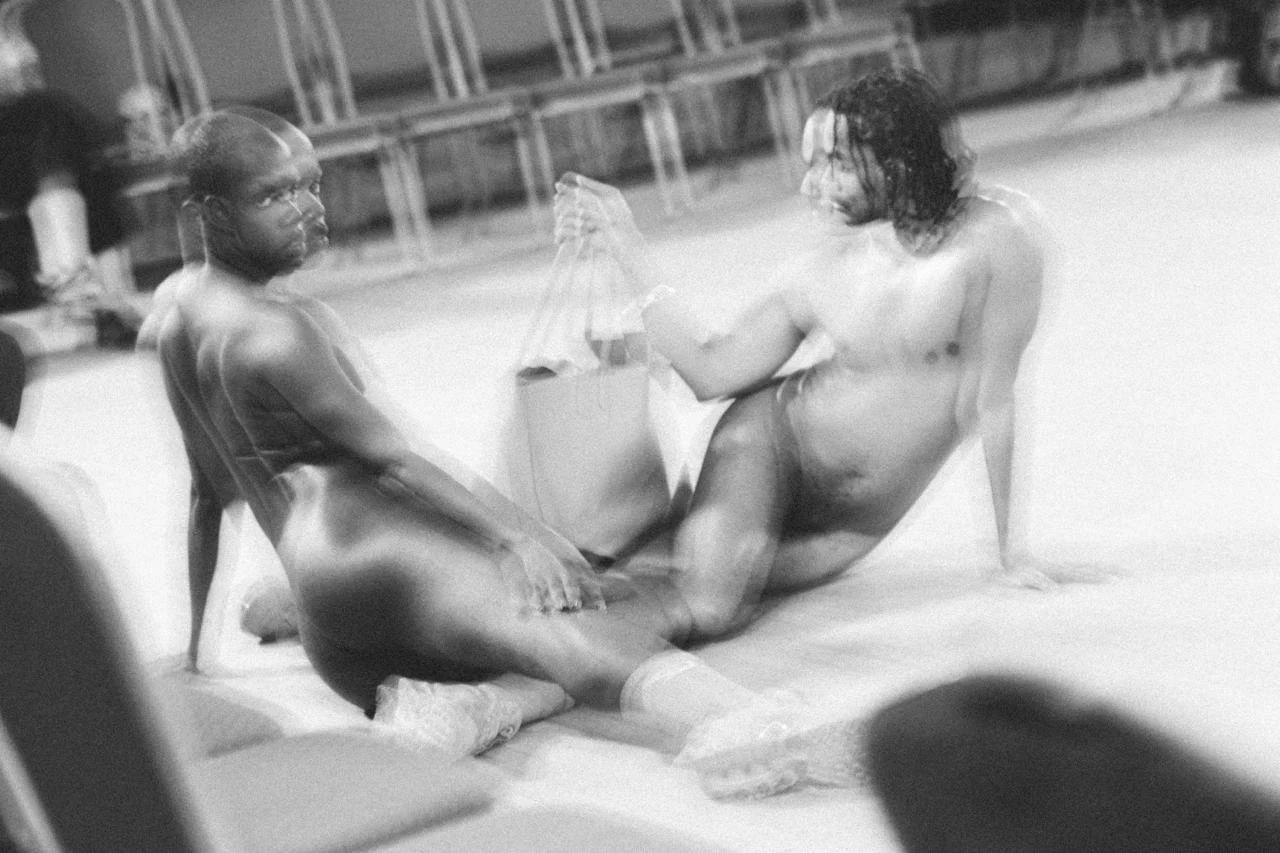
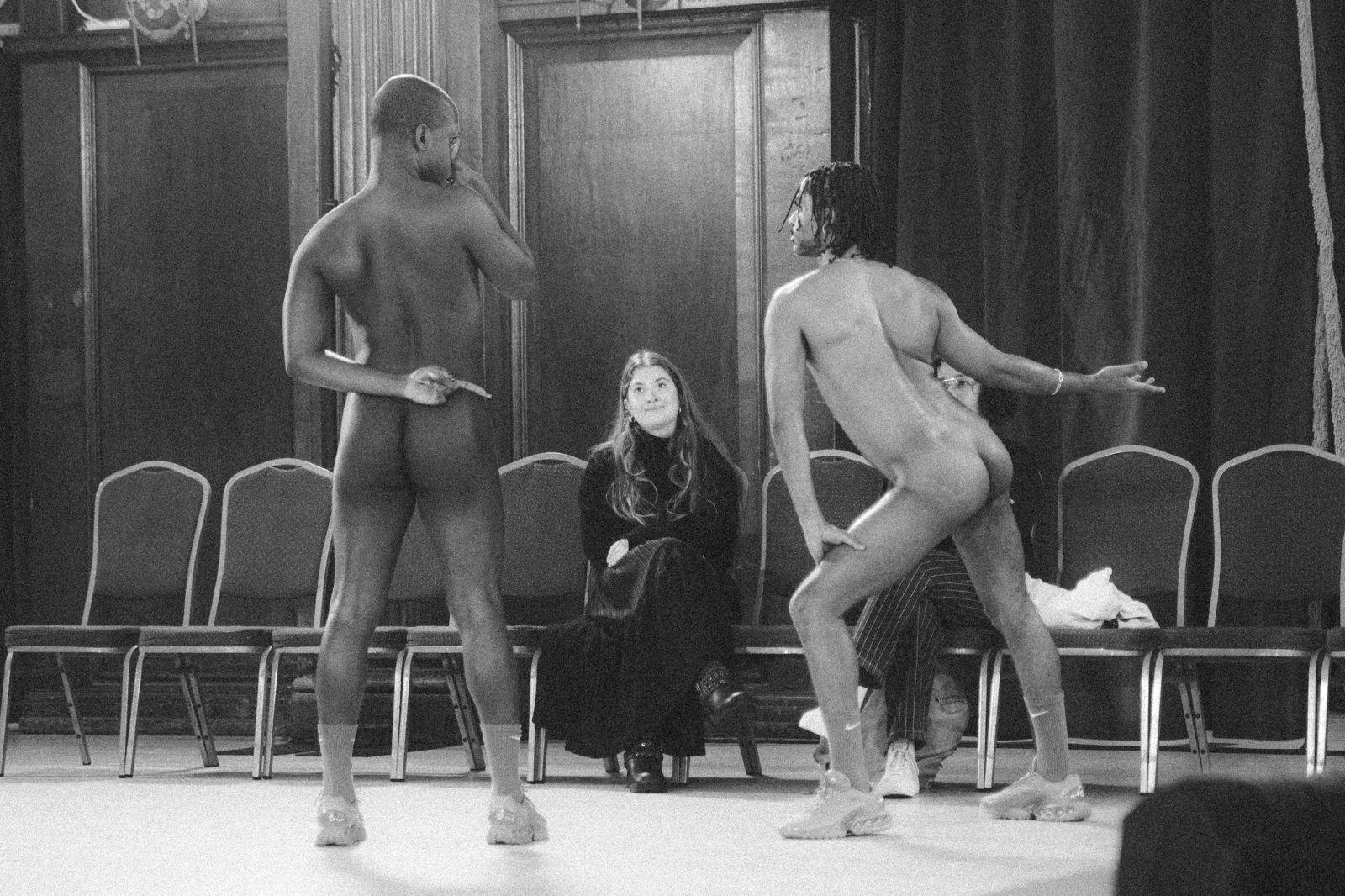
This message is embodied in Davi Pontes and Wallace Ferreira’s Repertório trilogy. The three dance performances are concerned with how the body - specifically a Black, queer body - defends itself. How it denies systems of violence. And their resistance manifests into a captivating display. Confronting these deep-rooted issues in the realm of motion and rhythm, Davi and Wallace expose (quite literally, as they perform nude) and resist a flawed politics. Now, they return to Repertório N.1 as the final part of this extended project.
Davi and Wallace began working on the performance in 2018. “Born out of the desire to create a work that could endure over time”. Their backgrounds in dance and visual arts informed the avant-garde series and, over the following years, they created and performed Repertório N.2 and Repertório N.3 at numerous festivals before their return to N.1.
At the start of their collaboration, Bolsonaro had just been elected president of Brazil with his far right extremism epitomising the excessive and intrusive violence that Repertório was developed to challenge. By continuing the trilogy now (only months after Bolsonaro’s trial for a political attack), Davi and Wallace allow audiences to nuance their reflections on how dangerous institutions are regulated. Davi feels that their return to Repertório N.1 also acts as “a way of honoring it” and “reaffirming [their] commitment” to the themes of the piece.
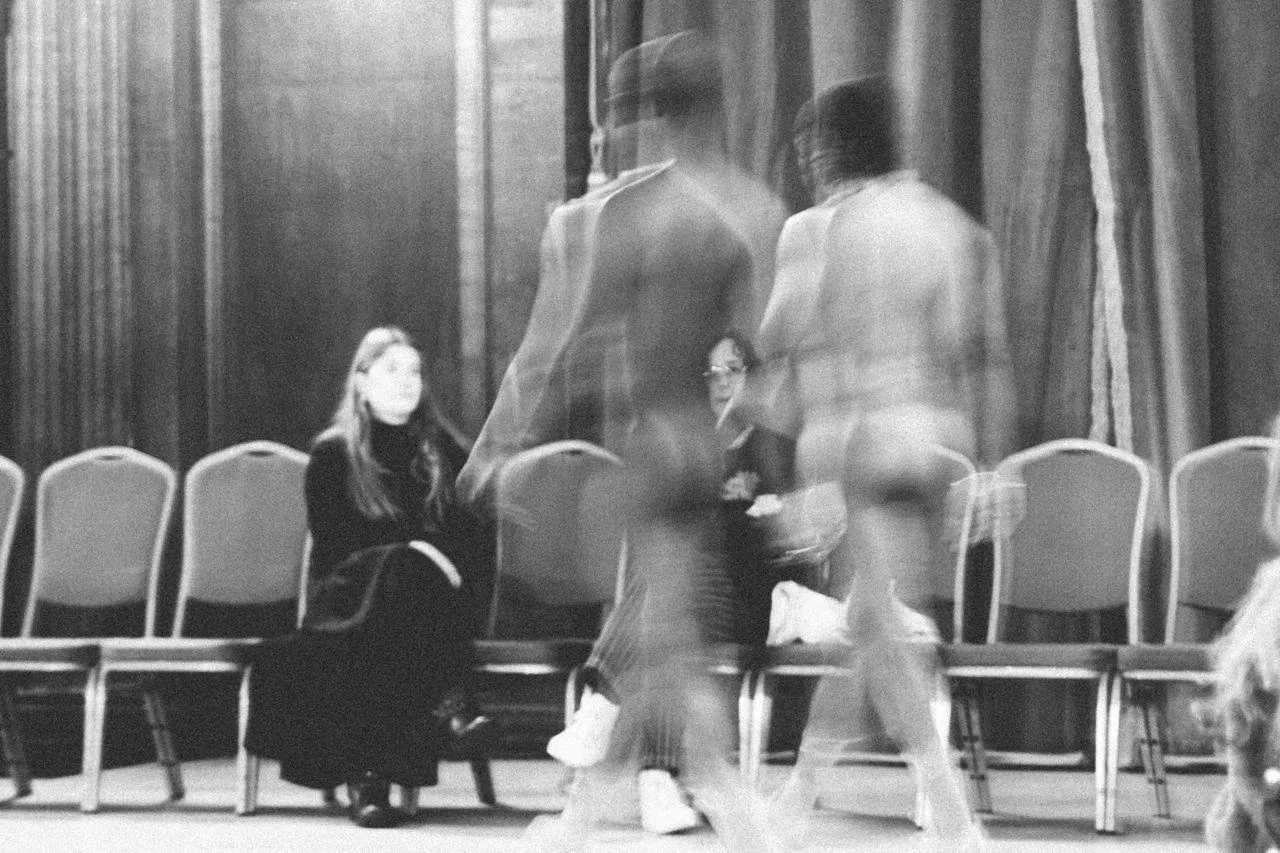
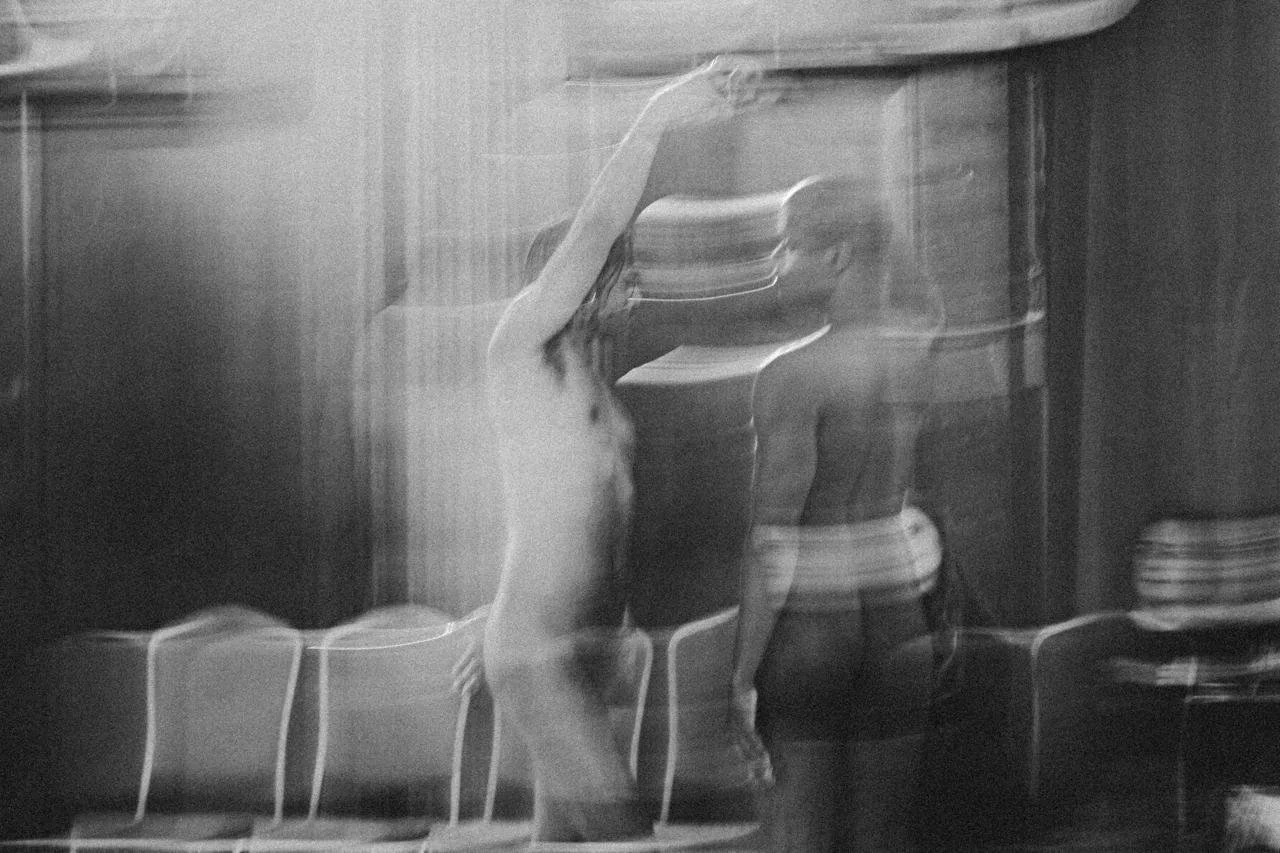
Before a 2026 tour, Repertório N.1 debuted in London at the Dance Umbrella Festival, hosted and co-produced by Serpentine, where MOVES was able to photograph the rehearsal and discuss the performance in more detail with Davi.
Can you discuss the various forms of violence that the Repertório trilogy confronts?
When we talk about violence in the trilogy, we are referring to structural, historical, and sensorial forms of violence. The violence that is constitutive of the modern world itself. The trilogy seeks to expose the conditions that make this violence possible and insists on not pacifying it.
And why is dance a convincing medium to explore this?
The body functions as a field where tensions and histories intersect. Perhaps we could have explored these questions of violence in other ways, as we have done with films, but movement still remained the foundation for us because it is through the body that these encounters happen.
How would you describe your relationship with dance?
Dance, for me, remains a mystery. It is a kind of raw material. Something that cannot be directly defined. Whereas, I can explain my relationship with choreography better than with dance. Choreography emerges from a specific historical moment.
Can you discuss the historical moment that Repertório N.1’s choreography responds to?
The work was first imagined in 2018 at a moment of intense political tension: the rise of the Bolsonaro government in Brazil. We were students at a public university and there was a sense of insecurity and uncertainty. Also, a concern about the use of democracy to elect leaders who sustain anti-democratic manifestations.
I feel that the effects of government do not simply disappear. For this reason, I think of the Bolsonaro government not merely as a punctual political phenomenon but as an intensification of strategies that legitimize racial violence in Brazil and whose consequences continue in the present.
Why did you perform nude?
From the beginning of the process we already knew it would be nude. We never had a long, specific conversation about it, but the work naturally led us in that direction. Costume pushes the work toward a notion of time, a very specific historical marker, and what interested us was creating images that transcend historical time.
Do you think the nudity gives the performance a sense of vulnerability?
Personally, I don’t feel more vulnerable for being nude. The situation becomes more tense, both for those onstage and for those watching. Our work is interested in this field of tension, an ethics that demands attention and a willingness to remain in discomfort.
What do you want audiences to feel during the performance?
I truly don’t know what I want the audience to feel. For me, the relationship with a work of art doesn’t function that way. It doesn’t restore a common world.
What might be a surprising part of your creative process?
We have a very quiet creative process. Usually, one of us proposes something and we take the proposal to its limit. Also, we never evaluate ourselves through video and, instead, always observe each other. Our thinking happens through doing. We’ve been working together for seven years now and we didn’t even know each other before this process.
Where do you usually search for inspiration?
Watching other works, reading, listening to music, talking with friends, and spending time with my family.
Are there other artists that you are inspired by and want our readers to know about?
Most of them are friends and people I admire. Iagor Peres, Castiel Vitorino Brasileiro, Thiago de Paula, Denise Ferreira da Silva, Luiz de Abreu, ah Bahia, Podeserdesligado, and Gabriel Massan… among many others.